Get Full Government Meeting Transcripts, Videos, & Alerts Forever!
Get email alerts on the Legal Framework topic
No spam. Unsubscribe anytime.
Commission hears legal foundations: why cities set different residential intensity zones
Summary
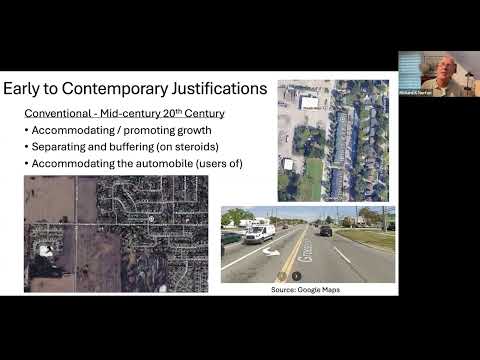
Commissioners and the public questioned the legal justification for low-, medium- and high-intensity residential zones; Norton said courts give communities broad deference to define density mixes as part of promoting public welfare, and cited Euclid and Michigan cases that enabled local zoning authority.
An attendee asked how local governments justify different residential intensities—low, medium, high—if police power is meant to protect general welfare across residents.
Professor Norton answered that courts interpret public-welfare authority broadly and generally defer to local choices about how to balance neighborhood composition and density. He explained that landmark cases answered different legal questions: Clements v. McCabe required state enabling statutes for zoning, while Village of Euclid v. Ambler Realty addressed constitutionality under the U.S. Constitution. Those legal developments together enabled the modern municipal zoning framework that permits communities to adopt varying intensity zones as policy choices.
Norton emphasized the policy route for residents who oppose a community’s density plan: political remedies (elections, public advocacy) and careful public engagement are the appropriate avenues rather than immediate judicial policy-making.