Get Full Government Meeting Transcripts, Videos, & Alerts Forever!
Get email alerts on the Climate And Law topic
No spam. Unsubscribe anytime.
Resident raises climate urgency and asks whether police-power language can block by-right projects
Summary
During public comment, Ken Garber urged the commission to treat climate risks as part of local decision-making and asked whether 'public health, safety and morals' language in the UDC can be used to challenge by-right projects; Norton explained police-power doctrine and noted remedies are typically political or litigative.
Ken Garber, a resident of the 2nd Ward, used his public-comment time to press climate concerns and to question the legal avenues available to challenge developments he sees as inconsistent with public welfare.
"I honestly think believe that, you know, because we're cooking the planet, we're basically heading for ecological disaster," Garber said, linking global heating to local planning priorities. He asked whether the police-power phrasing contained in the city’s Unified Development Code (UDC) can be invoked to challenge otherwise by-right projects.
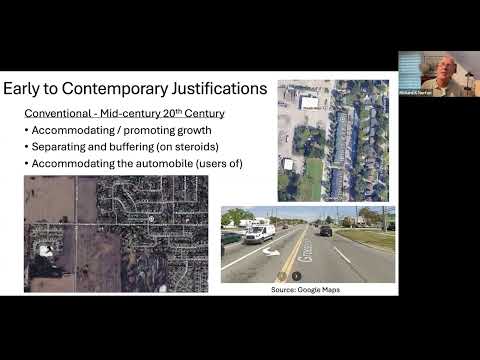
Professor Norton replied that the police power is the state’s underlying authority used to justify zoning for public health, safety and welfare, but he cautioned he was not city counsel. He said courts typically defer to local governments’ broad interpretations of public welfare and that attacking a zoning decision on those grounds requires substantial evidence that the action benefits private interests rather than the public. Norton suggested the political remedy—changing elected officials—often underpins disputes about policy direction.