Get Full Government Meeting Transcripts, Videos, & Alerts Forever!
Get email alerts on the Planning And Zoning topic
No spam. Unsubscribe anytime.
Professor Norton gives Ann Arbor planning commission a primer on zoning, history and trade-offs
Summary
At a July 28 work session, Professor Norton outlined how zoning evolved, the legal framework in Michigan and contemporary trade-offs — from housing affordability to environmental resilience — and urged planning that treats plans as guiding policy rather than inflexible blueprints.
Professor Norton, a visiting planning professor, told the Ann Arbor Planning Commission on July 28 that planning and zoning evolved together to manage incompatible land uses and the effects of technological change.
“We started zoning first and then realized maybe we ought to plan for zoning,” Norton said, summarizing a theme that ran through his presentation on the history of zoning and planning law.
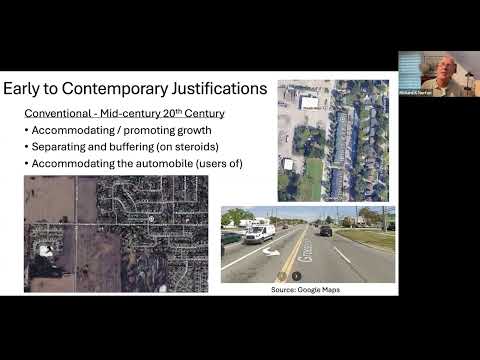
Norton traced zoning’s origins to early 20th-century responses to industrial nuisance, noted New York’s 1916 code and early Michigan actions in the 1920s, and described how case law and state statutes shaped local authority. He said the modern role of plans is to collect facts and set default policy: “Plans are not blueprints. They’re not blueprints that have to be strictly followed. At the same time, they’re not just talking points,” Norton said, arguing plans should guide subsequent zoning and capital-infrastructure decisions.
The presentation emphasized recent shifts in planning practice: a move away from strict separation of uses toward more mixed-use, attention to environmental protection (stormwater, tree canopy, heat islands) and a focus on housing affordability across income bands, including so-called “missing middle” housing. Norton warned that these goals require reconciling trade-offs rather than searching for single solutions.
Commissioners and members of the public asked follow-up questions about the commission’s role, when courts defer to local choices, and how to keep public engagement meaningful without relitigating decisions. Norton answered technical and legal questions but noted he was not city counsel on matters of litigation strategy.
The commission thanked Norton and signaled the presentation would form the basis for upcoming continuing-education sessions on development processes and code updates.