Get Full Government Meeting Transcripts, Videos, & Alerts Forever!
Get email alerts on the Housing Rehab topic
No spam. Unsubscribe anytime.
Urbana staff proposes lottery, income tightening and owner‑occupancy rules for home-repair grants
Summary
Urbana staff proposed consolidating multiple housing rehab programs into a single home‑repair grant, prioritizing households at 50% AMI or below, restricting awards to owner‑occupants, instituting a five‑year reapplication wait and selecting recipients by an annual lottery to better manage a $160,000 yearly program budget.
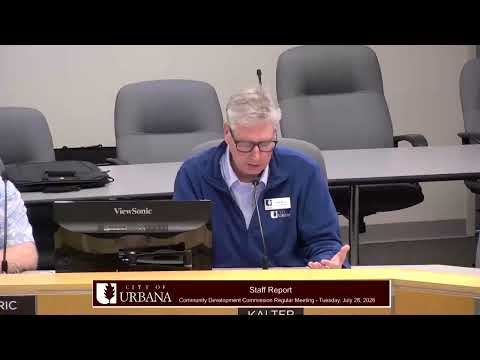
City grants manager Chris Colter laid out a proposed overhaul to Urbana’s home rehabilitation assistance on July 28, saying the city has roughly $160,000 a year to spend on housing rehab and that per‑home costs often run near $20,000 once HUD environmental reviews and radon mitigation are included. "I'm gonna say, about a $160,000 a year, that we've been putting towards the housing rehab program," Colter said, adding that mitigation systems can add "somewhere between 2 and 5,000 per house."
Under the plan staff would merge current separate grants (roof, sewer, accessibility and emergency repairs) into a single "home repair" program with an explicit list of eligible activities, drop the word "emergency" from program titles, and focus funds on owner‑occupied homes that meet residency and tax‑payment requirements. Colter also recommended narrowing priority to households at or below 50% of area median income and instituting a five‑year wait before a prior grantee could receive another award.
The biggest operational change would be moving from a rolling, first‑come model to an annual application window and a lottery selection. Colter described a timetable in which the city would advertise in December, accept applications January–February, vet applicants in March, perform assessments and environmental reviews in April–May, bid projects in June and begin work July–October. "The last thing, and this is kind of the biggest change, is that this would become a lottery system," Colter said, arguing the approach could reduce the administrative complexity of a rolling wait list and broaden access beyond those who learn about the program early.
Commissioners voiced both support and caution. The chair said the lottery could "provide broader or more fair access" compared with a first‑come system that favors applicants "in the know," while others warned a pure lottery can feel arbitrary to applicants and suggested possible weighting or preference mechanisms for highest‑need cases. Staff and commissioners also discussed enforcement options tied to residency requirements — from voluntary pledges to legal tools such as liens or forgivable loans — but Colter noted tracking transfers and enforcing paybacks is difficult when the program operates as grants rather than loans.
Colter said staff will return with revised proposals after incorporating commissioners’ feedback and that any formal rule changes would be brought back for commission action in a future meeting.