Get Full Government Meeting Transcripts, Videos, & Alerts Forever!
Get email alerts on the Orf Overview topic
No spam. Unsubscribe anytime.
Baltimore officials outline two years of opioid restitution fund work and spending
Summary
City presenters told the council the opioid restitution fund has committed $49.3 million through 31 grant agreements and disbursed $16.8 million to grantees, while promising quarterly dashboard updates and continued community input.
Councilwoman Felicia Porter convened the Public Health and Environment Committee’s legislative oversight hearing on the opioid restitution fund, and Sarah Whaley, executive director of the Mayor’s Office of Overdose Response, summarized two years of program activity and plans.
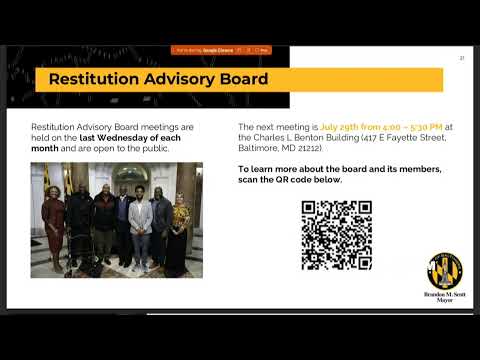
Whaley said the mayor’s August 2024 executive order established the fund and accountability framework. "The executive order provided a framework to manage the opioid restitution fund, ensuring accountability, transparency, and community input through each step and decision," she said. Elizabeth Tatum, director of the Mayor’s Office of Recovery Programs, provided grant totals: "There are now 31 grant agreements in place," and "There's $49,300,000 in ORF funding committed through grant agreements and $16,800,000 in disbursements to grantees through the end of June." The presentation emphasized multi‑agency coordination, hands‑on grantee support and an advisory board that includes residents with lived experience.
The presenters described two program streams: 22 named programs specified in settlement agreements (about $87 million allocated) and competitively selected community grants. Officials said most named programs have at least one executed agreement, some programs remain on hold for additional planning, and community grants were selected after a review and scoring process. Whaley and Tatum also highlighted technical assistance and monitoring practices intended to ensure grantees can sustain programs beyond the ORF dollars.