Get Full Government Meeting Transcripts, Videos, & Alerts Forever!
Get email alerts on the Financial Performance topic
No spam. Unsubscribe anytime.
June financials show mixed results: net revenue positive but gross revenue and AP days cause concern; board presses for inpatient strategy
Summary
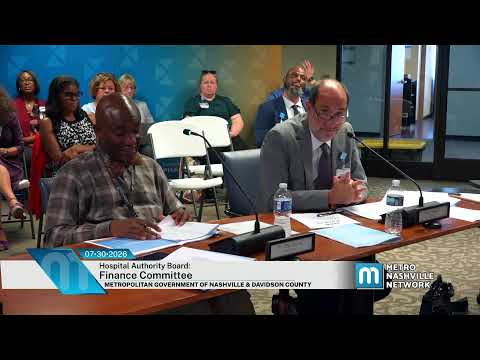
June financials showed June gross revenue $600,000 under budget but net revenue $650,000 over budget; year-to-date net revenue exceeded budget by $9.4M while expenses were unfavorable. Board members raised concerns about low inpatient census, differences between operational 'heads in beds' and finance ADC measures, and a rise in accounts-payable days to ~90–93 in June tied to subsidy timing.
Nashville General’s finance committee reviewed June financial statements and a year-to-date snapshot that included both positive and troubling indicators. Cole Griffin presented month and fiscal-year numbers: June gross revenue fell about $600,000 short of budget while net revenue was $650,000 over budget for the month; year to date gross revenue trailed budget by $14.6M while net revenue exceeded budget by $9.4M (partly from PHSPP funds received early in the year). From an expense perspective, June was $1.2M unfavorable and the fiscal-year-to-date expense variance was $14.7M, contributing to an operating margin unfavorable to budget by $500,000 for June and $5.3M year to date.
Board members focused on the inpatient census shortfall and the difference between finance-calculated average daily census (ADC) and the operational count. Staff explained the finance ADC (27 last year) differs from the operational metric (about 40 "heads in beds") because observation hours are calculated differently under the two-midnight rule; operations staff said they staff for heads in beds regardless of billing status. Staff outlined several actions to bolster inpatient utilization, including reviewing the hospital medicine contract (TeamHealth), meeting with outside primary-care partners and Meharry Medical College partners, and developing clearer provider-to-provider relationships to increase direct admissions. TeamHealth was identified as a contracted hospital-medicine provider; board members asked whether TeamHealth’s responsibilities should include explicit expectations about admissions.
Members also raised a notable operational-financial issue: accounts-payable days rose from the low 40s earlier in the year to roughly 90 by June. Financial staff attributed the spike to timing of subsidy and cash receipts at fiscal-year end and said they expect AP days to fall in July once regular subsidy timing resumes. Staff committed to include capital spending schedules and other clarifying detail in next month’s packet.