Get Full Government Meeting Transcripts, Videos, & Alerts Forever!
Get email alerts on the Land Use Rezoning topic
No spam. Unsubscribe anytime.
Council debates rezoning of Stan Cook property; owner, planners and council seek limit of 12 single-family homes
Summary
Council members discussed Ordinance 2025-05, a request to rezone the Stan Cook property from agricultural to Residential Moderate. Property owner Gary Eiser said the family intends single-family homes; a council member proposed approving the rezoning conditioned on a 12-home limit and staff outlined enforcement options (covenant, development agreement, conditional permits).
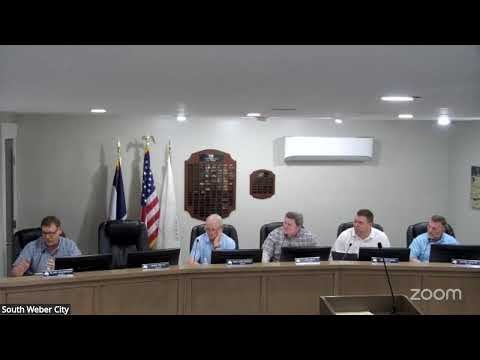
The South Weber City Council spent the bulk of its April 8 meeting debating Ordinance 2025-05, a rezoning request by Lane Cap to change the Stan Cook property at roughly 6966 South, 725 East from agricultural to Residential Moderate zoning. Property owner Gary Eiser told the council his family intends to build only single-family homes and that three lots are reserved for his children: "that has always been my dream, is to have my kids live next to me." Council members pressed staff and the applicant about the discrepancy between the developer's plan for 12 homes and the RM zoning the applicant seeks, noting RM could allow up to 18 units under density rules.
Planning staff explained the practical reasons the applicant sought RM zoning: lot sizes, setbacks and the site's configuration — a roughly six-acre parcel with four streets and two future connections — make RLM (Residential Low Moderate) standards difficult to meet without smaller frontages. A council member raised code fronting concerns, noting plan callouts that some lots appear to be 100-, 90- and 80-foot widths and asking whether the zoning change would alter those frontages.
A council member proposed approving the rezoning with a written condition that limits the development to no more than 12 single-family homes and stipulates that the property would revert to the prior zone if the condition is breached. The same councilor said planning commission shared similar concerns and urged protective language: "I propose that we approve it, but we approve it with the note that it can only have 12 single family homes, period, or it reverts back to the previous act." Staff discussed options to make such a limit durable — a covenant, a development agreement, or conditional building approvals — and cautioned the council that only certain tools create long-term protections while others (conditional approvals tied to permit timing) are easier but less durable.
No final vote on the ordinance was recorded in the transcript. The discussion closed with council and staff agreeing the next steps include drafting the specific protective instrument (covenant or agreement) or defining conditional permit language if the council wants the 12-unit cap to be enforceable.