Get Full Government Meeting Transcripts, Videos, & Alerts Forever!
Get email alerts on the Nuclear Policy topic
No spam. Unsubscribe anytime.
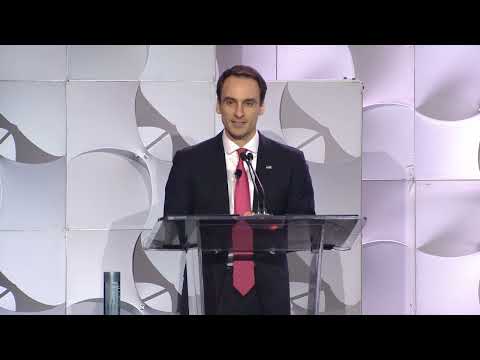
White House science adviser Michael Kratios hails federal reforms, cites licensing delays as barrier
Summary
Michael Kratios told a Utah audience that federal executive orders signed a year earlier have jump-started U.S. civilian nuclear activity, and he cited lengthy Nuclear Regulatory Commission review times and lengthy licensing processes as past obstacles.
Michael Kratios, President Donald Trump's chief science and technology policy adviser, told attendees in Utah that the administration's executive orders on nuclear energy, signed a year earlier, have begun to reverse long-standing regulatory and market barriers.
"Federalism really is foundational to America's greatness, and states like Utah are fundamental to the American nuclear renaissance," Kratios said, praising state-level engagement and thanking Governor Cox for hosting the event.
Kratios framed last year's executive orders as a turning point. He said they represent "the most transformational decision for civil nuclear power since President Eisenhower announced Atoms for Peace in 1953," and recounted U.S. nuclear-industry figures from that earlier era: "Within 2 decades, the country had 30 nuclear power plants in operation, 55 under construction, and more than 80 in planning or under order."
He argued that before the recent policy changes the industry had stalled: "Prior to president Trump's policies, we weren't testing new reactors. We were shutting perfectly good ones down. We were totally dependent on other countries for our fuel." Kratios also cited specific regulatory timelines, saying an average NRC review once took "more than 20000 hours," combined operating licenses could take "48 to 60 months," and license amendments sometimes required "2.5 years."
Kratios said the reforms have produced new momentum for firms and researchers and will form the basis for future innovation. He thanked private-sector and state leaders in the room for their work on advancing the technology.
The remarks were introduced by Governor Spencer Cobb, who named members of his staff and invited Kratios to speak. The transcript available to this report ends partway through Kratios's description of pilot reactor goals; that truncated passage is noted in a companion item focused on the DOE pilot program.