Get Full Government Meeting Transcripts, Videos, & Alerts Forever!
Get email alerts on the Public Comment topic
No spam. Unsubscribe anytime.
Resident urges clarity on 'discretionary' millage, questions state lottery and funding
Summary
During the public hearing Richard Arnold asked why his tax bill showed two discretionary school‑millage lines and pressed how counties secure state funds; board members and staff explained that 'discretionary voted' millage was approved by voters, is accounted for and audited, and summarized FEFP redistribution.
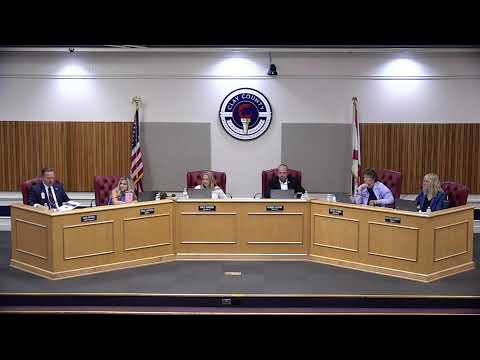
Richard Arnold, a Clay County resident, used the public‑comment period to ask for clarification about two ‘‘discretionary’’ millage lines on his property tax bill and about how counties obtain state funding for capital projects. "My total was $4,700... and 0.5 of that goes to the school system... The thing that catches my eye is you've got it says school discretionary… and then a school discretionary voted amount," Arnold said, asking why those lines total more than $600.
Board member Gilhausen and CFO Dawn Posey replied that the 'discretionary voted' millage is a voter‑approved millage and that voted dollars are accounted for and audited; Posey said the TRIM advertisement must list how those dollars may be spent. Posey added that the Family Scholarship (voucher) program reduced state funding and that the district remains dependent on the Florida Education Finance Program (FEFP). A staff presenter explained the FEFP formula and said Clay County receives a mix of local and state funding (staff characterized local revenue at about 21% of total funding for the district in rough terms).
Arnold also expressed concern about rising property taxes affecting elderly homeowners and asked how counties request additional funds from Tallahassee for major capital needs; staff said districts and boards regularly contact state lawmakers and follow FEFP and statutory procedures for grants, impact fees and other capital revenue sources. The board offered to follow up with more in‑depth explanations after the meeting for residents who want further detail.