Get Full Government Meeting Transcripts, Videos, & Alerts Forever!
Get email alerts on the School Finance topic
No spam. Unsubscribe anytime.
How Indiana funds Mount Vernon schools: education fund, operations and debt service
Summary
Superintendent Jack Parker explained the three main school funding 'buckets'—education, operations and debt service—said the district transfers less than the typical 15% from education to operations to prioritize classroom spending, and noted the district ranks low on combined per-student funding.
Parker walked viewers through a simplified "bucket" slide to explain school finances: the education fund (state-funded, per-pupil), the operations fund (largely local property-tax revenue) and the debt service fund (for bonds used to build or renovate facilities).
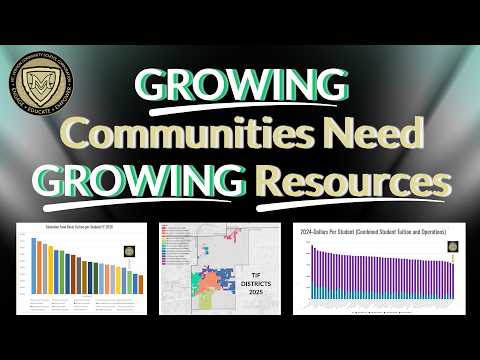
"The education fund is supported directly from the state...that's by far our largest fund," Parker said, adding that the state expects some transfer from education to operations (about 15%); the district transfers around 8–9% to preserve classroom resources. He also showed a 2024 comparison indicating Mount Vernon receives relatively low state tuition support per student compared with nearby peers.
Parker emphasized that combining state tuition support and local operations revenue places Mount Vernon toward the bottom of Indiana districts on per-student funding, a point he used to explain fiscal constraints when planning for growth and services.