Get Full Government Meeting Transcripts, Videos, & Alerts Forever!
Get email alerts on the Mental Health Services topic
No spam. Unsubscribe anytime.
District mental-health team reports expanded services, urges ‘let’s end the stigma’
Summary
Elizabeth Ortiz outlined the We Care AADUSD program’s year: 112 individual consents, 54 suicide-risk assessments, 150 restorative groups and bilingual parent workshops, and said the team will continue campus-based therapy and caregiver supports.
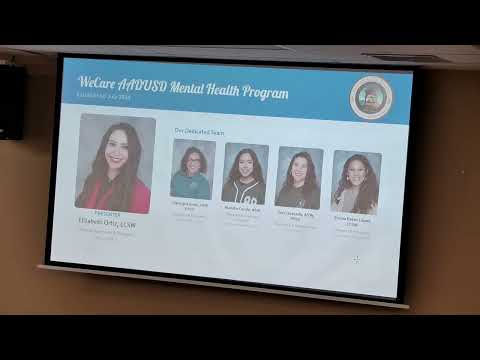
Elizabeth Ortiz, the district’s licensed clinical social worker for the We Care program, presented a year‑end summary to the Acton‑Agua Dulce Unified School District board on June 11, describing expanded school‑based mental‑health services and higher contact totals than in prior years. Ortiz said the team provided 112 individual consents for services across campuses, more than 100 crisis or case‑management contacts, 54 suicide‑risk assessments and nine threat assessments. She noted restorative practice groups (about 150) and a 10‑week leadership girls group with 11 participants, plus bilingual parent workshops and three “Coffee with a Counselor” sessions.
Ortiz introduced her staff and interns and emphasized stigma reduction: “Let’s talk about it. Let’s end the stigma,” she said. Board members thanked Ortiz and the team, noting that several trustees and community members had not realized the scope of services until the presentation. Ortiz said some supports were funded through grants and that additional updates would follow in the superintendent’s August report.
The presentation named students served, program components, and training the team completed; Ortiz identified two interns by name and listed partnerships used for caregiver workshops. The board did not take action on program funding at the meeting but recognized the program’s role in reducing disciplinary incidents and supporting families.