Get Full Government Meeting Transcripts, Videos, & Alerts Forever!
Get email alerts on the Animal Welfare topic
No spam. Unsubscribe anytime.
Rescue group credits partnerships as Smith County shelter posts 90.7% live-release rate
Summary
Smith Animal Rescue told the Smyth County Board of Supervisors it achieved a 90.7% live-release rate in 2025 through vaccinations, pre-adoption sterilization and microchipping, plus facility upgrades paid by grants, the presenters said.
Smith Animal Rescue representatives updated the Smyth County Board of Supervisors on operations at the county animal shelter, reporting improvements to care and facility systems and a 2025 live-release rate of 90.7 percent.
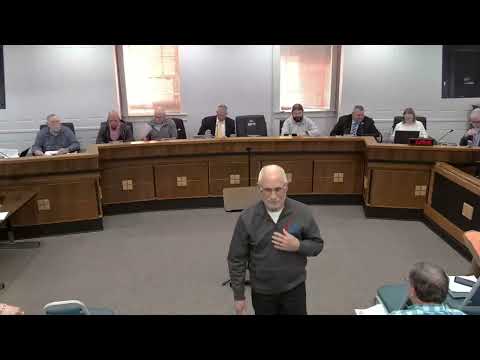
Susie Fields, introduced by the board as the shelter director, said the rescue organization has implemented routine vaccinations, sterilized animals prior to adoption and microchipped adopted animals. "Vaccinating the animals in our care to prevent contagious diseases, sterilizing all animals prior to being adopted, and microchipping all adopted animals have been tremendous improvements at the operations of the shelter," she told the board.
Fields and Dave Fields said a recent grant from the Virginia Federation of Humane Societies funded a backup generator and a fenced concrete exercise pad; presenters said the generator was critical during a recent ice and snowstorm. They also reported an additional 2026 grant to overhaul the isolation room, install a new dog-washing station and provide elevated cat beds — work they said would be completed at no cost to the county.
The presenters credited a network of partners — Smith Bridal Rescue, Smith County Humane Society, county animal control, local veterinary clinics and regional rescue organizations — for the higher live-release rate. Fields said roughly 25% of dogs are reclaimed by owners, another 25% adopted locally and about 40% transferred to partner rescues in higher-density regions; for cats, she said nearly 70% are transferred to partner rescues.
Supervisor board members praised the volunteer and nonprofit effort and asked clarifying questions about capacity and breed-specific transfer challenges. The presenters said larger-breed dogs are harder to place and that national trends show declining adoption rates for large dogs.
The board did not take formal action on the presentation; presenters answered questions and provided handouts for the record.