Get Full Government Meeting Transcripts, Videos, & Alerts Forever!
Get email alerts on the Crb Legal Analysis topic
No spam. Unsubscribe anytime.
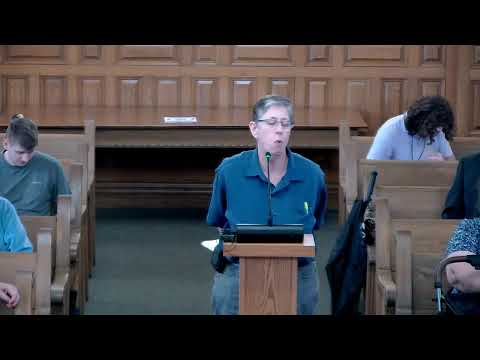
Attorney tells Syracuse committee Rochester ruling doesn’t eliminate local CRB investigatory role
Summary
Local attorney Alan Rosenthal told the Syracuse Common Council Public Safety Committee that the Rochester appellate decision (referred to in the transcript as "Locust 2") is fact‑specific to Rochester’s Police Accountability Board and does not, by its terms, strip Syracuse’s Citizen Review Board of its investigatory authority; he urged hiring independent counsel or pursuing a declaratory judgment.
Chair Donna Moore opened the Public Safety Committee meeting to discuss why Citizen Review Board (CRB) investigations were paused after an appellate ruling in Rochester. She said corporation counsel had advised the council that the Rochester decision could affect Syracuse because both cities sit in New York’s 4th Department.
Alan Rosenthal, the invited attorney, argued the Rochester cases focused on a local ordinance that gave that city’s Police Accountability Board (PAB) exclusive authority to impose discipline — a power the courts found conflicted with police collective‑bargaining rights. ‘‘The council and the CRB have been hoodwinked and hornswoggled by your own corporation council,’’ Rosenthal said, urging committee members to look closely at the differences between the Rochester ordinance and Syracuse’s long‑standing CRB statute.
Rosenthal said Syracuse’s ordinance, enacted in 1993, explicitly limits the CRB to recommending discipline and reviewing policies and systemic issues; it does not compel discipline or require officers to submit to interviews under threat of job loss. He told the committee that those distinctions place Syracuse outside the core holding of the Rochester appellate decision.
Pressed about legal risk, Rosenthal acknowledged corporation counsel’s concern that the police union might sue and that the city might decline to indemnify individual council members. He described that tactic as a ‘‘boogeyman’’ scare and recommended two paths: resume investigations and defend the CRB or, more cautiously, hire independent counsel and file a declaratory judgment action to obtain a court ruling on the CRB’s authority. He estimated that a declaratory judgment procedure could take roughly three to six months, far shorter than a multi‑year appellate process.
Rosenthal closed by urging the committee not to let the CRB ‘‘lie fallow’’ while waiting on appeals, and by reminding members that Syracuse’s CRB had previously prevailed in litigation where the CRB sought access to police information. Chair Moore and committee members thanked Rosenthal and invited follow‑up questions on the specific legal options.