Get Full Government Meeting Transcripts, Videos, & Alerts Forever!
Get email alerts on the Water And Cooling topic
No spam. Unsubscribe anytime.
Commission favors closed‑loop cooling and utility sign‑off for data centers
Summary
Planners and commissioners recommended requiring closed‑loop cooling systems and that local utilities sign off on any public water hookups for data centers; applicants would still be allowed limited public water for restrooms but large‑scale cooling discharge would be restricted.
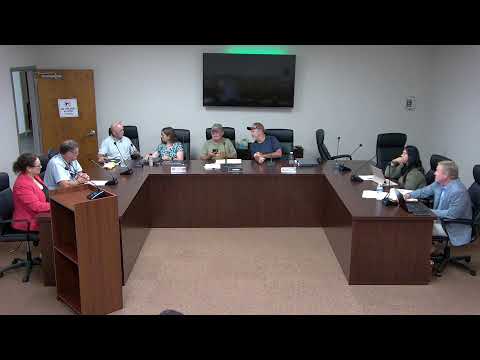
Coffee County commissioners on July 28 signaled support for requiring closed‑loop, self‑contained cooling systems at proposed data centers, and for language that would prevent routine hookups to public water systems without utility approval.
One commissioner summarized cooling categories and urged a closed‑loop standard: "Total closed loop where basic consumption after it's charged system, basic consumption would be next to 0 ... That's what I think — must have self contained closed loop cooling system." The commission discussed allowing public water only for normal domestic uses (restrooms and handwashing) while restricting cooling‑water discharge and requiring engineered plans that demonstrate no adverse effects to other utility customers. Several members suggested utilities (TVA, Duck River Electric) must be consulted and that an engineer should verify whether local systems can supply a proposed data center without harming existing customers.
The planner and commissioners asked staff to draft clear language about cooling technology, allowable public‑water uses, and engineering verification procedures. They also discussed water‑use monitoring, flushing/discharge rules, and potential state permitting triggers, and directed the planner to consult TDEC and local utilities before the next draft.