Get Full Government Meeting Transcripts, Videos, & Alerts Forever!
Get email alerts on the Land Use topic
No spam. Unsubscribe anytime.
Board declares lead agency for Erickson Senior Living project, orders DEIS and schedules scoping hearing
Summary
The Rye Brook board adopted a positive declaration for the proposed Erickson Senior Living PUD at 975 Anderson Hill Road and authorized circulation of a draft DEIS scoping outline; a public scoping hearing is set for Sept. 8, 2026. Trustees and residents were urged to identify impacts they want studied.
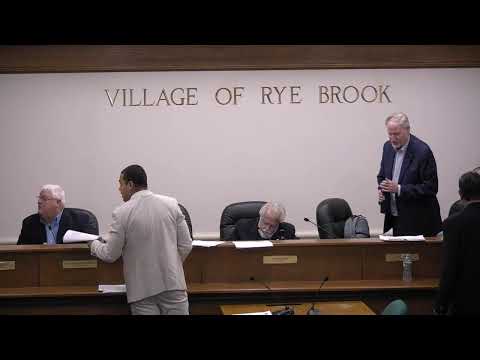
The Village of Rye Brook Board of Trustees voted unanimously July 28 to declare itself lead agency for a zoning petition from Erickson Senior Living and adopted a positive declaration that requires preparation of a draft environmental impact statement (DEIS).
“Therefore requiring the preparation of a draft environmental impact statement or a DEIS,” Administrator Chris said when summarizing the board's action and the next steps. The board approved circulation of the draft DEIS scoping outline and invited written comments during a 60‑day scoping period; it scheduled a public scoping hearing for Tuesday, Sept. 8, 2026, at 7:30 p.m. in Village Hall.
The petition seeks text amendments and redevelopment of the approximately 84‑acre site at 975 Anderson Hill Road (the former Doral/Arrowwood conference center) to allow a senior living community with a continuum of care, the submitted concept showing roughly 750 independent living units and 84 assisted‑living/memory‑care units with related amenities. Chris noted the application was referred to the Rye Brook planning board and county planning pursuant to applicable municipal procedures before the DEIS work proceeds.
Residents and trustees emphasized early participation in the scoping process. A board member warned the public that this is “the very beginning of the process” and encouraged people to review the 38‑page scoping submittal to identify issues they want studied, including traffic, building height/visual impact and stormwater runoff. “If you have concerns or impacts that you think are gonna impact you or the community, raise them now,” a trustee said.
What happens next: the applicant's draft scoping document will be circulated to involved agencies and the public; the board will consider comments and adopt a scoping outline that sets the scope of issues for the DEIS. The board’s official action also authorized circulation of the scoping outline and the subsequent requirements to prepare the DEIS.