Get Full Government Meeting Transcripts, Videos, & Alerts Forever!
Get email alerts on the Elections Charter topic
No spam. Unsubscribe anytime.
Glendale council directs staff to study charter amendments and possible 0.25¢ sales tax ahead of August ballot deadline
Summary
Council debated placing civil-service and other charter amendments on the Nov. 3 ballot and whether to pair them with a proposed 0.25¢ local sales tax; staff reported county cost estimates and council set a special meeting to finalize direction before the August 5 deadline.
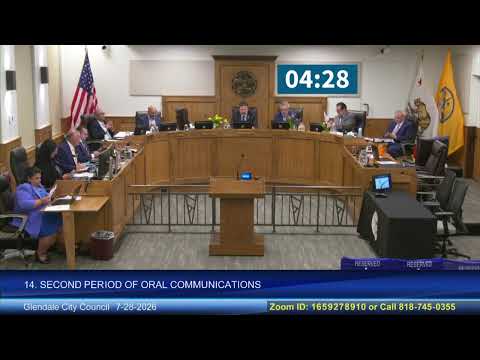
The Glendale City Council on July 28 directed staff to return with detailed materials on proposed charter amendments and a possible 0.25¢ local sales tax and scheduled a special meeting this week to decide whether to place measures on the November ballot.
City staff summarized options developed by the Charter Review Committee, including a package of changes to modernize the civil-service system, updates to fund-accounting language, and prospective term limits and compensation rules for the city clerk and treasurer. City counsel told the council the county estimates a base cost of roughly $523,000 to place a single measure on the November ballot, with increments of about $70,000 for each additional question — and a stand-alone special election could cost about $2.6 million. City Treasurer Rafi Manoukian warned members that "This is not the right time to spend $779,000 on charter changes that was not budgeted" and urged consolidation with future elections to cut costs.
Council members debated two ballot-structure options: one consolidated civil-service question or separate questions (three or four total measures), and whether to add a separate sales-tax question. Staff noted that certain civil-service items may legally be permissible only on a statewide-general-election ballot, constraining timing for some changes. The mayor and several council members said they were open to pairing a revenue measure with the charter items to offset the ballot expense; staff advised that a fiscal-emergency declaration (which would require unanimous council support under the city ttorney's guidance) is a possible pathway for a special election but carries legal and procedural requirements.
Council did not adopt any charter measures at the July 28 meeting. Instead, members voted to direct staff to prepare detailed cost, timeline and policy materials and to hold a special meeting before the county's filing deadline so the council could decide whether to place up to four measures and/or a 0.25¢ sales-tax question on the November ballot.
What happens next: staff will present the fiscal analysis and draft resolutions at a special meeting; if council chooses to proceed, it must adopt required resolutions and ask Los Angeles County to consolidate the measures by August 5.