Get Full Government Meeting Transcripts, Videos, & Alerts Forever!
Get email alerts on the Impact Fees topic
No spam. Unsubscribe anytime.
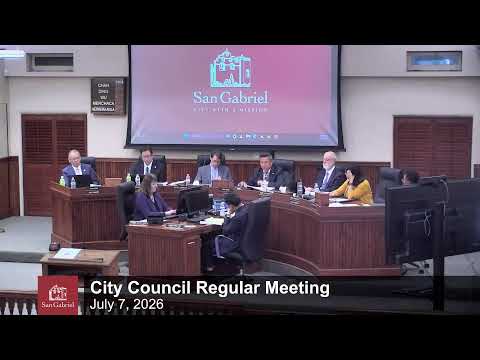
San Gabriel council hears draft impact‑fee nexus study that sets 'maximum justified' fees
Summary
City staff and Willdan presented a draft nexus study that calculates legally-justified maximum development impact fees across police, fire, parks, traffic and sewer categories; council asked detailed questions and was told adoption will return after required public notice.
The San Gabriel City Council on July 7 received a presentation of a draft Development Impact Fee Nexus Study prepared by Willdan Financial Services that lays out the city’s legally justified upper limits for fees developers could be charged to offset growth-related infrastructure costs.
James Edison, managing principal with Willdan, told the council the study’s purpose is to calculate the “maximum justified fee” under nexus and proportionality principles derived from takings law and state guidance. “Development impact fees are linked to development,” Edison said, explaining the study’s methodology and the five fee categories—police, fire, open space, traffic and sanitary sewer. He also noted AB 602-related changes, including a 30‑day notice requirement for nexus‑study adoption.
Edison said the study identifies the city’s capital projects (including a new police facility and two fire‑station expansions) and allocates costs to new development under three standard methods: existing inventory, planned facilities and a system‑plan approach. He emphasized that the fee schedule represents the legal ceiling: “You can charge 0. I mean, you can charge any anything less than this, no more than this,” Edison said, adding that the council retains policy discretion over where to set fees below the calculated maximum.
Councilmembers pressed staff on assumptions, projections and examples. Staff and the consultant committed to returning after council input and the statutorily required public notice period, and noted final adoption would follow a public hearing and additional analysis.