Get Full Government Meeting Transcripts, Videos, & Alerts Forever!
Get email alerts on the Transaction Review topic
No spam. Unsubscribe anytime.
California office briefs Washington board on transaction‑review model and AB 1415 expansion
Summary
California Office of Healthcare Affordability officials described how their material change notice and Cost and Market Impact Review (CMIR) process works, what factors trigger deeper review (access, cost, competition, quality), and how AB 1415 widened reporting to include private equity and MSOs; staff highlighted lessons on opaque ownership and the need for sufficient data.
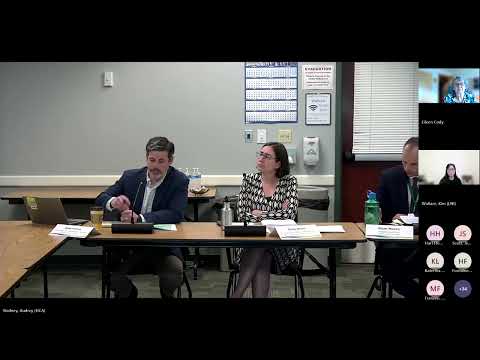
Officials from the California Office of Healthcare Affordability (OCAH) on July 22 told Washington’s Health Care Cost Board that a formal material change notice (MCN) followed by a short review can trigger a deeper Cost and Market Impact Review (CMIR) designed to assess likely effects on access, quality, competition and cost.
Brian Kearns, assistant chief counsel, said the MCN requirement must be filed at least 90 days before closing and that OCAH uses a two‑tier review: a preliminary 45‑day assessment of whether a deeper CMIR is needed, and a 90‑day (extendable) CMIR when warranted. "Per our statute, notice is required at least 90 days in advance of closing," Kearns said. He added that OCAH engages economic experts and solicits public comment during CMIRs.
Karli Asuba (spoke as Karli/Carli during the presentation) described AB 1415, enacted in October, which expanded who must file notices to include certain private equity investors, hedge funds and management service organizations (MSOs). Asuba said regulators initially struggled to capture transactions that used opaque corporate structures and that the updated rules clarify which MSOs and private equity configurations qualify as "noticing entities."
OCAH officials reported dozens of notices and several CMIRs since launching; staff described lessons learned: ownership is often opaque; submissions must include sufficient documentation; timelines for deep reviews are tight and may need tolling; and public engagement is important but has been uneven. "When we launched we learned ownership structures can be convoluted," Asuba said, adding that AB 1415 and revised regulations are designed to close gaps in notice coverage.
Washington board members used the presentation as a direct comparison point for their discussion about whether and how to recommend state transaction‑review authority. California’s portal, use of economic experts, and practice of publishing reports and FAQs were highlighted as practical tools Washington could adopt if it pursues a review program.