Get Full Government Meeting Transcripts, Videos, & Alerts Forever!
Get email alerts on the Gas Infrastructure topic
No spam. Unsubscribe anytime.
Gas utilities warn storage and pipeline constraints leave little margin for winter shocks
Summary
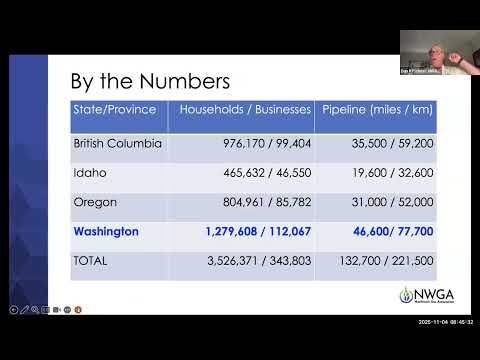
Northwest natural gas companies told the commission that winter operations are heavily reliant on storage (Jackson Prairie, Mist, Plymouth) and that pipeline deliverability and compressor outages (e.g., Chehalis) can cause rapid loss of service; historical peak day numbers and storage deliverability thresholds were cited as operational limits.
Natural‑gas operators told UTC commissioners the region’s winter resilience rests on storage deliverability and pipeline health. Scott Johnson (Northwest Natural) emphasized the role of storage facilities and the operational impacts when deliverability drops: during January 2024 outages, tens of thousands of customers lost service and restoration required door‑to‑door technician work.
“our gas supply portfolio was 8,000,000 decatherms or or 8,000,000 therms, sorry, about,” Scott Johnson said describing the January 2024 peak and the company’s 10,000,000‑therm supply portfolio. He and other gas presenters noted constrained pipeline capacity (utilities operate winter months at over 90% utilization on average across recent years), single‑point compressor problems (Chehalis) and that storage deliverability can degrade when inventories fall below operational thresholds (Jackson Prairie deliverability starts to decrease at about 60% full, presenters said).
Speakers recommended continued winterization, real‑time monitoring, joint tabletop exercises, mutual‑aid agreements and hedging strategies to reduce reliance on volatile spot markets. Several utilities said they are reducing Sumas spot reliance, adding long‑term purchases, and increasing storage recall for peak‑day reliability.