Get Full Government Meeting Transcripts, Videos, & Alerts Forever!
Get email alerts on the Open Meetings Act topic
No spam. Unsubscribe anytime.
City attorney outlines Open Meetings Act: public sessions required unless statute allows executive session
Summary
City Attorney David Morrison told the committee that meetings must be open except where statute expressly permits an executive session, explained the definition of a meeting and quorum, and warned about 'walking quorums' that can create inadvertent violations.
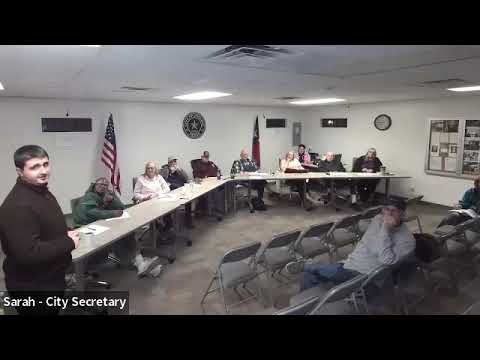
City Attorney David Morrison led a detailed explanation of the Open Meetings Act, telling committee members that meetings ‘‘must be open to the public unless a statute expressly permits an executive session.’'
Morrison defined a meeting as the confluence of a quorum, discussion of public business, participation by government members and a government call to order. He cautioned that informal one-on-one conversations or a chain of private exchanges can accumulate into a ‘‘walking quorum’’ and thereby violate the statute.
Morrison illustrated that risk with a hypothetical chain of council members privately conveying support for an idea; he said such stepwise conversations can form a meeting without public notice and subject the city's actions to legal challenge. He stressed that bylaws set each board’s quorum threshold and that vacancies do not change the number required for a quorum.
"A governmental body's meetings must be open to the public unless a statute expressly permits an executive session," Morrison said, emphasizing the narrowness of permissible closed sessions and the need to identify the specific statutory exception when invoking one.
He urged members to coordinate through the city secretary for agenda items rather than attempting to resolve issues informally to avoid forming an unintentional quorum.