Get Full Government Meeting Transcripts, Videos, & Alerts Forever!
Get email alerts on the Sewer Infrastructure topic
No spam. Unsubscribe anytime.
Snellville officials discuss $2.5M city contribution to speed county sewer upsizing
Summary
City staff told the council that downtown sewer lines are undersized and at capacity, blocking redevelopment. Staff outlined a county-led 4,800-linear-foot upsizing estimated at $9.8 million and recommended the city consider contributing about $2.5 million (from SPLOST overage) to move the project up the queue.
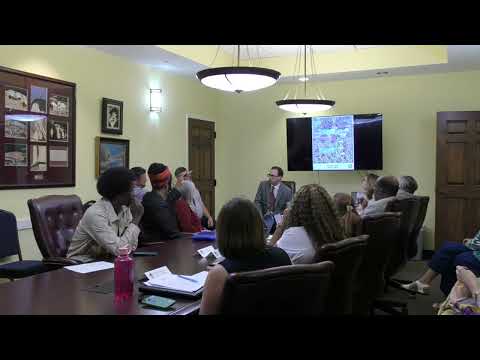
City of Snellville staff told the mayor and council at their July 27 work session that much of the town-center sewer network is undersized and currently at capacity, preventing new development in parts of the core. "Most of the existing sewer infrastructure that we have in the town center is undersized and is at full capacity," a city staff member said while walking the council through maps of 8-inch and larger lines.
Staff said the county is proposing a joint project (identified in materials as the Lenoir Church phase) that would enlarge key reaches. The county estimated the full upsizing would cover roughly 4,800 linear feet and cost about $9.8 million; staff said it would likely take multiple years to design and construct. "County estimates that total project cost at about 9.8, million," the staff member said, and added the county would handle design, bidding and construction while the city’s role would primarily be securing easements.
To move the work up Gwinnett County’s priority list, staff proposed the city consider a direct financial contribution. Staff cited the city’s available 2023 SPLOST allocation and projected overage (staff estimated $2.0–$2.2 million in overage collections) and recommended committing those overages as the city’s share. "We're estimating our portion of this 9,800,000 would be about... $2,500,000," the staff member said.
Councilmembers asked about the downside of advancing city funds and the associated risk if sales-tax collections fall; one councilmember described the alternative as waiting five to ten years for the county's timeline. The mayor and several councilmembers signaled support for opening conversations with Gwinnett County water resources to pursue partnership and easement work, but no formal motion or vote was made at the session.
What happens next: staff was directed to pursue discussions with Gwinnett County about timing, easements and whether an up-front city contribution would accelerate the project schedule.