Get Full Government Meeting Transcripts, Videos, & Alerts Forever!
Get email alerts on the Data Centers topic
No spam. Unsubscribe anytime.
Residents urge moratorium, independent studies and recusal amid debate over proposed hyperscale data center
Summary
Dozens of residents pressed Columbus city leaders July 28 to halt negotiations over a proposed hyperscale data center (Project Ruby/RWBY), citing noise, water use, public‑health risks and potential conflicts of interest and asking for independent impact studies and a public moratorium.
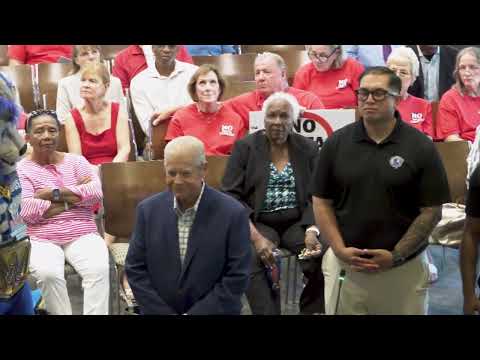
Dozens of Columbus residents used the public‑comment portion of the July 28 city council meeting to press for a moratorium and independent studies on a proposed hyperscale data center commonly referred to in testimony as Project Ruby or Project RWBY. Speakers raised concerns about long‑term noise from backup turbines, air and water pollution from generators and cooling systems, heavy water use, and impacts on rural neighborhoods and farms.
"I'm here this afternoon to address a serious public health concern, the noise pollution from hyper hyperscale data centers," Carolyn Weinbaum said, describing noise she said she experienced near a QTS facility and urging the council to set stricter operational standards. Mary Hannah Reynolds, who identified herself as a Muskogee County resident from Yupitoy, warned of construction and operational noise “that may exceed 90 decibels for miles,” argued the technology overlay district does not sufficiently prevent data centers near residential areas, and asked whether the city could compel shutdowns or reconfiguration if facilities breach health thresholds.
Speakers asked the city to require independent, third‑party impact studies rather than rely on developer‑provided analyses. Several commenters pointed to lawsuits elsewhere over low‑frequency engine noise and to peer‑reviewed research they said links chronic exposure to cardiovascular and sleep harms. Christine Difeliciantonio and others asked the council to insist that studies not be conducted by parties with financial ties to the project (they listed Columbus Water Works, Georgia Power and Choose Columbus as "non examples" for independent research).
The meeting also included a public request that City Manager Tyson Begley recuse himself from negotiations. Andrea Atkins said Begley's prior roles in rural broadband and work with development entities raised the appearance of a conflict and asked for financial disclosures and formal recusal from deliberations on any hyperscale project in Muskogee County. Atkins said the concern rests on optics and possible pecuniary interests and cited state disclosure rules as relevant.
City staff did not announce new contract action during the meeting. Speakers asked for clear next steps: a city‑commissioned independent environmental and noise impact study, full disclosure of any negotiations and developer incentives, and a pause on council votes or executive actions while studies and disclosures are completed. The council heard the comments but did not adopt a moratorium or a formal recusal at this meeting.