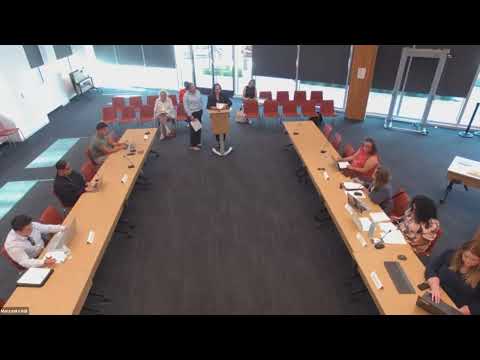
Commission presents delinquency-prevention work plan, priorities and projects
Summary
The joint commission reviewed its delinquency prevention work plan, legal authorities, aspirations and active projects including updated handbooks and outreach initiatives; commissioners emphasized transparency and data on funded community programs.
The Juvenile Justice Commission and the San Mateo County Delinquency Prevention Commission presented a consolidated delinquency-prevention work plan on July 28 that lays out statutory authority, annual processes and current projects intended to improve reentry services, educational continuity and community outreach. Chair Johanna Rasmussen said the plan compiles existing documents and clarifies which initiatives fall under the commission's purview as an advisory and oversight body.
"So for those of you who remember, the delinquency prevention work plan was an item that was requested by Supervisor Corso," Chair Johanna Rasmussen said, describing how the subcommittee assembled the plan from previously approved documents. The presentation reviewed the commissions' legal basis (federal Juvenile Justice and Delinquency Prevention Act of 1974 and local ordinance), the annual inspection mandate, and the project-approval process used by commissioners to develop initiatives.
Commissioners described a set of ongoing and legacy projects: updating the handbook "How to Help Your Child After an Arrest" (English/Spanish and a forthcoming Tongan translation), a multimedia outreach team and a "Turning 18: What You Need to Know" guide for youth leaving custody. The commission also flagged priorities for its 2027 strategic plan, including attention to least-restrictive programs and SecureTrack policy changes.
Commissioners asked for clearer reporting on outcomes and implementation timelines for vendor contracts and community partners. The presentation noted the commission's prior investments, including $680,000 raised to fund a Pierpoint peer-court program; commissioners said they will continue to use the plan as a framework for project proposals and community engagement.
AI generated
The text on this page is AI generated. Summaries, highlights, analysis, and video transcripts are all produced from the original source material.
AI can make mistakes, so if you spot one, and we will fix it for everyone.
Note: the source content is unaltered by us. Any content source we link to, be it a video, an audio recording, or a document, is presented exactly as its publisher released it. That publisher is usually a government body, sometimes an individual official or another organisation.