Get Full Government Meeting Transcripts, Videos, & Alerts Forever!
Get email alerts on the Estuary Overview topic
No spam. Unsubscribe anytime.
Deschutes Estuary restoration plan outlines dredge, habitat and new 5th Avenue bridge
Summary
State project team presented a conceptual plan to restore tidal flow to the Deschutes Estuary: a ~500,000 cubic‑yard dredge to reestablish the main channel, placement of sediment to build marsh habitat, a new 5th Avenue bridge with pedestrian amenities, and phased dam removal tied to funding and permits.
The Department of Enterprise Services and its consultants presented a conceptual plan to restore tidal flow to the Deschutes Estuary, reestablishing roughly two miles of historic channel and creating new marsh habitat along the shoreline. The project team said restoration would begin with an initial dredge and proceed in phases tied to bridge construction and permitting.
"There would be about a 500,000 cubic yard dredge event to reestablish the historic, main channel of the Deschutes River," said Tessa, the project design lead, describing the scale of material to be moved and reused on site to form tidal marsh and islands. Project engineers said the dredged sediment will be placed along shorelines to create habitat beneficial to salmon and shorebirds and to avoid truck haul to upland disposal sites.
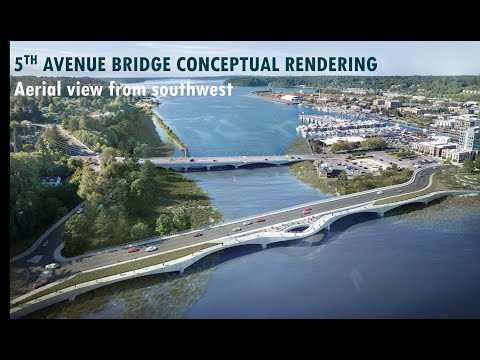
The proposal includes a new 5th Avenue bridge aligned just south of the existing dam to allow traffic to continue on the old crossing during construction and then enable safe dam removal and tidal reconnection. "We're proposing a 5th Avenue Bridge that maintains two lanes for vehicles while providing a generous pedestrian and bicycle corridor," said John Williamson, the bridge architect with Hellerman Architects. Presenters emphasized that the pedestrian corridor is being designed as an extension of Heritage Park and the waterfront trail network.
Why it matters: presenters told attendees the EIS completed through 2022 found estuary restoration offers the broadest ecological and cultural benefits compared with alternatives. The team stressed the work is tightly phased: 30% design and permitting are the immediate priorities, and construction timing depends on securing substantial federal and state funding.
Next procedural steps: the team is advancing 30% design this year, pursuing grant and legislative funding, and expects to return for community review at 60% design. If sufficient design and construction funding is secured, presenters said construction could begin in 2027.