Get Full Government Meeting Transcripts, Videos, & Alerts Forever!
Get email alerts on the Graduation Rates topic
No spam. Unsubscribe anytime.
Cascade SD 5 highlights high graduation rates for focal groups as board hears integrated‑plan goals
Summary
Presenters told the board that graduation rates for focal groups are exceeding district targets and described integrated‑plan investments (SIA, Measure 98, early literacy grant) and supports such as tutoring and RTI to sustain gains.
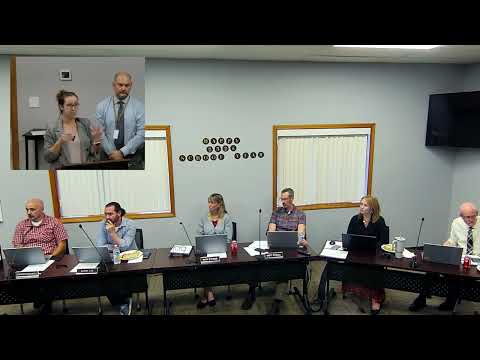
Mr. Dyer, an integrated‑plan programs presenter, told the Cascade SD 5 board the district is aiming to lift graduation and proficiency targets while keeping a focus on three focal groups: economically disadvantaged students, English learners and students receiving special education services. He said the district has set an 85% target for focal‑group graduation and that current rates for those groups are higher than the target.
"Economically disadvantaged is sitting at 90%. Our English learners is at 92.3, and then our special education is at 88.5 percent," Mr. Dyer said. He credited a combination of targeted tutoring, transportation for after‑school supports and increased practitioner collaboration across schools for the improvement. The presenters said those services are funded in part by the Student Investment Account, Measure 98 and early‑literacy grant dollars.
In response to board questions about the ambitious 80% proficiency goal for third grade, Mr. Dyer described a districtwide adoption of Oregon RTI (response to intervention) to standardize core instruction, benchmark progress and deploy tiered interventions. He said the district coordinates PLCs, common assessments and math incentives to reduce variation across schools. "Response to intervention really breaks things down into three tiers," he said, summarizing the approach to identify students who need tier‑2 or tier‑3 supports.
Board members pressed for clarity on how much of the gains depended on classroom practice versus external programs; presenters repeatedly emphasized teacher relationships and the work of in‑building coaches and specialists as central to sustaining results.