Get Full Government Meeting Transcripts, Videos, & Alerts Forever!
Get email alerts on the Public Comment topic
No spam. Unsubscribe anytime.
Residents urge Old Tappan council to act on rising deer conflicts
Summary
Multiple residents at the Old Tappan meeting urged immediate borough action to reduce deer impacts, citing vehicle collisions, property damage and a rise in Lyme disease; some favored hunting programs while others urged non‑lethal alternatives.
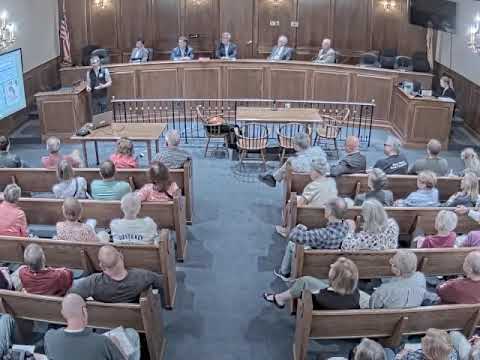
Scores of residents used the public-comment period to press the council for faster action on deer impacts, saying the situation is harming landscaping businesses, risking public safety and driving health concerns.
“I have 20 deer in my backyard,” one longtime resident said, and later added during public comment that “The mayor and council in this town have done nothing for 20 years.” That commenter (speaker 11) said the problem had become “overwhelming” and urged the council to make a decision rather than delay.
Other speakers cited rising Lyme disease statistics and property damage. A resident recited state case numbers during comment, arguing the borough must act to protect public health. In response, DEP biologist Brian Schum said studies show a strong correlation between deer abundance and tick populations, and advised that municipal action is most effective when coordinated regionally.
Views among residents differed on methods: some argued for managed hunting or contracted programs to reduce population and provide venison to food pantries; others opposed lethal programs on moral grounds and asked the council to prioritize nonlethal measures such as sterilization, fencing, or habitat modifications.
Council members said the presentation was “eye-opening” and that further evaluation and vendor consultations will follow before the council would adopt a formal policy.