Get Full Government Meeting Transcripts, Videos, & Alerts Forever!
Get email alerts on the Ems topic
No spam. Unsubscribe anytime.
Gunter council refuses to ratify recent ambulance purchases, opens debate on city-run EMS
Summary
After heated public comment, the Gunter City Council voted not to ratify two recently acquired ambulances and ordered a full accounting of procurement and outside negotiations as residents pressed for transparency and safe response times. Council members split over immediate startup vs. additional study of a municipal EMS service.
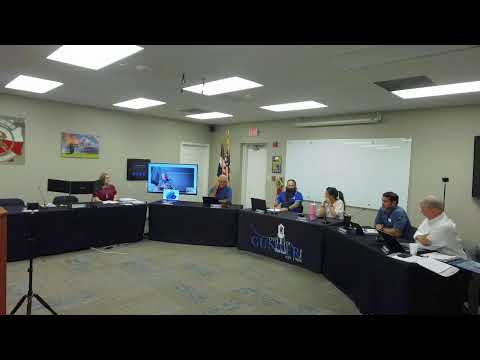
The Gunter City Council on June 4 voted to not ratify recent purchases of two ambulances and directed staff to provide a full accounting of the procurement process, after residents raised concerns the purchases and parallel negotiations were carried out without explicit council authorization.
Resident Renee Marler told the council she had compiled documentary evidence and said, “On April April 14th 2026, 2 ambulances were purchased for $155,000 According to the documents that was done without City Council's nomination for a competitive bid process.” The council’s motion to not ratify was made by an alderman who argued those procurement decisions were policy-level choices for the full body, not actions to be approved after the fact.
Supporters of a locally operated EMS said the city faces an operational gap if the county’s current contractor reduces coverage, and that local control could shorten response times and improve continuity. Justin Parker, a parent who recounted his child’s emergency experience, urged the council to “thoroughly examine response times, staff levels, training standards, operational readiness, long term sustainability, and most importantly the potential impact on patient outcomes.”
Opponents said the sequence of events — talks with county officials, vendor discussions and equipment purchases — appeared to have advanced outside public view. One council member said the issue was not whether municipal EMS could work in principle but whether it was prudent to proceed without a council-approved plan that included budget and procurement clarity.
Staff and proponents said they had contacted regional partners and that some county funding might remain available; staff provided rough financial context during the meeting: a licensing fee cited at $680, capital outlay estimated closer to $100,000 (up to $200,000 in some scenarios), and a projected gross annual billing of about $1.2 million with an expected collections rate in the region around 25 percent. Staff also said officials were seeking clarity from the county about timing for the next contract and that the city could lose the opportunity window if it delayed for years.
The council’s motion carried and members asked for the following items to be placed on a future agenda: (1) a complete timeline of negotiations and purchases, (2) procurement documentation showing vendor selection or cooperative purchasing authority, (3) clarification of funding and county commitments, and (4) corrective actions or policy changes if council procedures were bypassed. The council did not direct an immediate sale or disposal of the ambulances; those operational decisions were left for a follow-up session.
Next steps: staff will assemble the requested documentation and return to council with a discrete agenda item listing options — continue the existing county ILA, ratify purchases pending corrective actions, sell the vehicles, or adopt a new plan to stand up city-operated EMS with a full operational and financial plan.