Get Full Government Meeting Transcripts, Videos, & Alerts Forever!
Get email alerts on the Development Fees topic
No spam. Unsubscribe anytime.
Sumner council adopts amended development-fee schedule, targets full recovery for commercial permits
Summary
The Sumner City Council on Aug. 3 adopted Ordinance 2973 as amended, directing the city to create a development services fund, set commercial permit fees to 100% cost recovery and residential permit fees to 85%. Council approved the measure after an amendment passed 5–1 and a final 6–0 vote.
The Sumner City Council voted Aug. 3 to adopt Ordinance 2973, updating the city’s development-fee service schedule and establishing a new development services fund. The ordinance, approved as amended, sets a policy goal of 100% cost recovery for commercial permit fees and 85% cost recovery for residential permit fees.
Development Services Director Doug Beagle introduced the ordinance and said the current fee structure is subsidized by the general fund. "Right now, we're on average covering about 75% of our our our efforts," Beagle said, describing the gap the ordinance intends to close by moving toward full recovery and by creating an enterprise-style fund to track revenues and expenses.
Council member Kenna proposed the amendment that set the specific recovery targets, calling it a cautious step to "ease the burden on the residential side" while pursuing full commercial recovery. The amendment passed on a 5–1 roll call before the council voted 6–0 to adopt the ordinance as amended. The clerk’s roll calls recorded Kenna, Malcolm, Wilsey, Evers and Hockstetter voting in favor of the amendment and one member voting no; the final ordinance vote was unanimous.
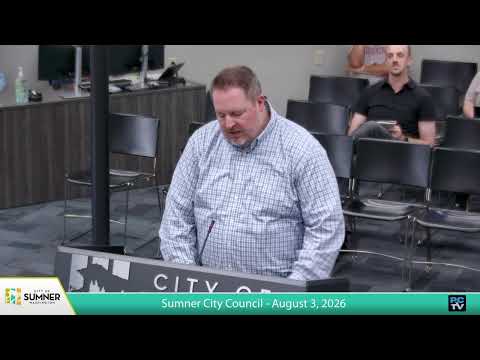
Resident commenter Mister Adams urged the council to pause and gather more historical data before pursuing 100% recovery, asking for the number of permits issued and staff costs over the last 20 years. City administrator Jason Wilson and staff clarified procedural points (including that a tie vote would defeat an amendment) and that the ordinance does include creating the enterprise fund. The council did not postpone action and directed staff to implement the fee schedule per the adopted ordinance.
Next steps include drafting updated fee schedules and implementing the fund and system changes needed to process the revised rates; staff estimated modest administrative work to reflect the 85% residential adjustment and to establish account coding for the enterprise fund.