Get Full Government Meeting Transcripts, Videos, & Alerts Forever!
Get email alerts on the Tree Ordinance topic
No spam. Unsubscribe anytime.
Tree ordinance prompts split council debate; staff to return with revisions
Summary
Council members and residents spent extended time debating a proposed tree-preservation ordinance. Staff presented multiple alternatives (notification for dead/dying trees, $75 permit and replacement ratios for exceptional trees, credits per 1,000 sq ft, a 12‑month moratorium after removal to deter clear-cutting); council asked planning commission to consider revisions rather than rushing adoption.
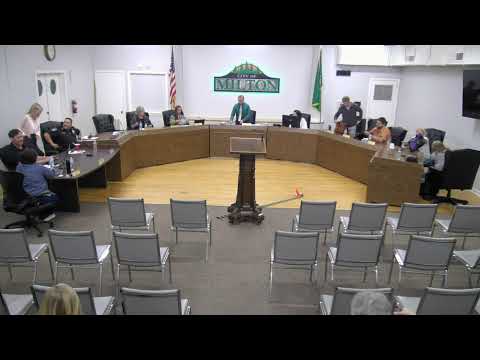
A lengthy debate over a proposed tree-preservation ordinance dominated Milton’s July 6 meeting. Planning manager Angelie Stahlnecker laid out several options drawn from other cities (notably Kirkland and Burien) and described approaches for distinguishing dead/dying/hazardous trees from healthy “exceptional” trees, permit/notification processes, replacement-ratio proposals and a development moratorium designed to discourage clear-cutting by developers.
"If it is obviously dead, dying, or hazardous... you can remove without permits. We would request a tree removal notification to help us keep track of that," Stahlnecker said, describing a no-cost notification option for clearly hazardous trees and a proposed $75 permit for exceptional-tree removal accompanied by replacement requirements. Council members and residents expressed sharply divided views: some warned against overreach into private-property rights, while others urged stronger measures to protect the city's canopy and to prevent developers from clear-cutting lots.
Council member Mounts argued the council lacked data showing Milton needs such a strict ordinance and criticized provisions that would place most burden on private owners; he warned the city could be forced to hire staff to administer permits. Residents and other council members countered that development and redevelopment pose the greatest threat to canopy and supported tools such as a moratorium on building permits for 12 months after an exceptional-tree removal to discourage speculative clear-cutting. Because of the split, Stahlnecker said she will return to the planning commission with revised language and flowcharts to reflect council feedback rather than moving to adoption tonight.