Get Full Government Meeting Transcripts, Videos, & Alerts Forever!
Get email alerts on the Strategic Plan topic
No spam. Unsubscribe anytime.
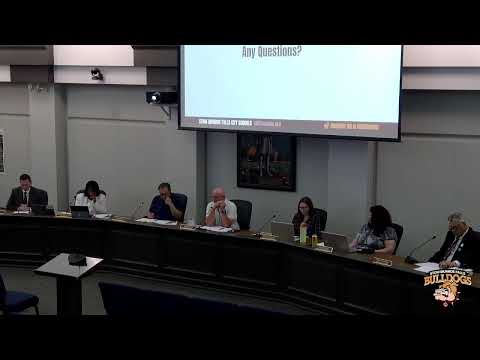
Stow‑Munroe Falls board adopts 2026–31 strategic plan; debates wording of mission and vision
Summary
The Stow‑Munroe Falls City School District Board approved a five‑year strategic plan and agreed on mission and vision language after extended discussion over terms like “empowered” and “prepared to lead.” The plan sets six goal areas and begins a year‑one implementation sequence with quarterly progress updates.
The Stow‑Munroe Falls City School District Board on Aug. 3 approved a five‑year strategic plan for 2026–2031 and adopted refined mission and vision statements after more than an hour of discussion over specific wording.
Consultant Tom Speaks and Superintendent Dr. Gould presented the plan and said it was built on more than 1,300 community data points, including surveys and focus groups. The board’s approved vision reads in part: “Every student is valued, empowered to discover their strengths, prepared to lead, contribute, and succeed.” The mission adopted states: “We inspire, challenge, and support every student through meaningful experiences, high expectations, and strong relationships throughout their school experience.” Tom Speaks said the process produced the language after workshops and community input.
Board members debated several single‑word choices. One member questioned whether “empowered” implied an ideological stance; others argued it signals student ownership and long‑term capability. “We inspire, challenge, and support every student through meaningful experiences, high expectations, and strong relationships,” the district consultant said during the discussion.
District leaders described six strategic goal areas—student learning, culture and supports, staff well‑being and professional empowerment, business affairs and operations, communications, and fiscal accountability—and outlined year‑one priorities such as establishing vertical alignment structures, PBIS expansion, data‑dashboard implementation (EduCLIMBER) and an action‑step process to follow the board’s approval. Treasurer Eric Soltis and operations director Mark Treen highlighted measurable next steps, including quarterly progress reporting and creation of KPIs tied to each goal.
The board vote to adopt the plan was unanimous. Administration said staff will translate the goals and objectives into action steps and performance indicators in the coming weeks; quarterly updates will be provided to the board.
The strategic plan adoption concludes a yearlong process of community meetings, staff workgroups and board workshops and signals the launch of an implementation stage that administration said will include measurable benchmarks and a public dashboard.