Get Full Government Meeting Transcripts, Videos, & Alerts Forever!
Get email alerts on the Lake Restoration topic
No spam. Unsubscribe anytime.
Lake association launches $100,000 nanobubble pilot on Pokegama Lake, seeks county advocacy
Summary
Pokegama Lake Association and Moliere briefed Pine County commissioners on a nanobubble pilot installed June 5 to reduce nutrient loading and harmful algae; the pilot cost is $100,000, full‑lake work is estimated at about $2.2 million, and presenters asked the county to advocate with DNR and BWSR on permitting and funding.
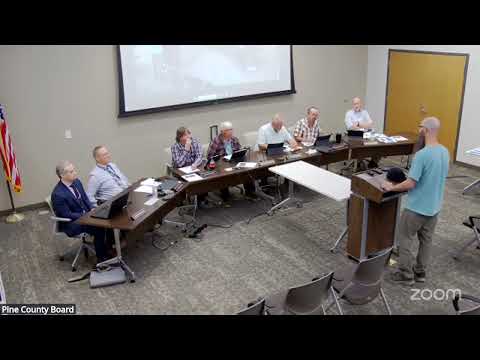
Kathy Nielsen, co‑chair of the water quality committee for the Pokegama Lake Association, told the Pine County Board the lake has been listed as impaired for decades and that traditional chemical treatments are expensive and short‑lived. She described a pilot nanobubble treatment installed on June 5 in the lake's North Bay and said the association raised local support and funds for the pilot: "In 8 weeks, we were able to raise over $53,000 from over 210 lake owners, lake‑focused businesses, and other lake users," Nielsen said, adding that the association matched those dollars.
Jonathan Morales of Moliere explained that nanobubbles are a form of aeration that can deliver oxygen into sediments to change the chemical conditions that release phosphorus, reduce muck, and lower harmful algae blooms. He and the association described the pilot as a demonstration project: "We estimated $2,200,000 for the full lake. This pilot project is a $100,000," Morales said. Presenters said the pilot will run through September and that they will collect intensive monitoring data to submit to the Minnesota Department of Natural Resources and the Board of Water and Soil Resources (BWSR) to inform permitting and funding.
Commissioners asked about timelines for visible improvement, sources of nutrient loading, regulatory oversight, and monitoring. County and watershed partners noted that upland runoff, streambank erosion and shoreline development contribute nutrients, and presenters said a full solution would also treat inflows such as Pokegama Creek. The association asked the board to "advocate with the DNR over the next year or two to quickly and effectively write permitting protocols for the new nanobubbles technology" and to consider partnering on funding strategies including grants and a potential lake improvement district.
The board received the presentation and commissioners expressed interest in following the pilot's results; no appropriation was made at the meeting, though presenters asked for county advocacy and possible funding support in the future.