Get Full Government Meeting Transcripts, Videos, & Alerts Forever!
Get email alerts on the Local Finance topic
No spam. Unsubscribe anytime.
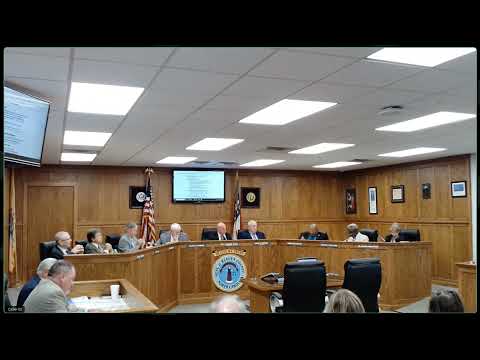
Bladen County commissioners hear sharp questions over 0.25¢ sales-tax plan for new community facility
Summary
Commissioners and residents pressed officials on whether a proposed 0.25¢ sales-tax referendum could cover a proposed community facility’s costs, with speakers citing a $24.5 million construction estimate and warning that the tax’s revenue is legally restricted to referendum-specified uses.
Bladen County commissioners on Aug. 3 faced sustained public comment and commissioner questioning about a proposed 0.25¢ sales-tax referendum intended to fund a new community facility. The chair said construction estimates raised affordability concerns: "It's $350 a square foot times 70,000 square feet. That's $24,500,000 just for the building," and asked how roughly $600,000 a year in sales-tax revenue would service that scale of debt.
Commissioner Peterson urged restraint and noted legal limits on how referendum proceeds may be used: "The money has to be specifically used for whatever your referendum says," he said, adding that actual facility size could be scaled based on revenue projections. Several residents and small-business owners argued the tax would largely be paid by out-of-county visitors, not local property owners, with one business owner noting that "90% of their traffic pretty much is out of county and out of state," to argue for a sales-tax approach rather than a property tax increase.
Supporters said the tax would enable a long-term asset for youth and community events; critics warned of competing county needs such as water-system repairs and building maintenance. Multiple speakers urged the commissioners to provide clearer, detailed cost estimates and a plan for how referendum language would restrict and prioritize spending before asking voters to approve the tax.
The board did not take a final vote on a referendum at the meeting and directed staff to continue analysis and community outreach. Next steps include follow-up financial modeling and clarifying the referendum’s wording and allowable uses.