Get Full Government Meeting Transcripts, Videos, & Alerts Forever!
Get email alerts on the Housing Needs Study topic
No spam. Unsubscribe anytime.
Urbana housing-needs study: outreach finds affordability concerns, sample biases and low vacancy estimates
Summary
Presenters from Champaign County and Urbana staff reported Phase 1 findings: a 27-question resident survey (325 responses), a 134-response landlord survey and 12 stakeholder interviews. Results show affordability and safety are top concerns and sample skew toward older, higher-income homeowners; vacancy estimates vary and staff plan targeted outreach.
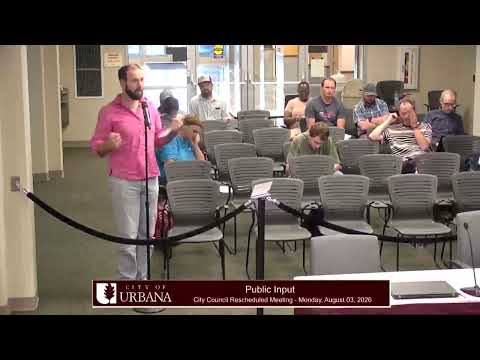
City staff and consultants presented Phase 1 of the Urbana Housing Needs Study on Aug. 3, describing outreach methods, survey respondents and preliminary findings. The presentation covered a 27-question resident survey (325 respondents), a 19-question landlord survey (134 respondents representing roughly one-third of Urbana rental units) and 12 stakeholder interviews.
JD McClanahan, planner III at the Champaign County Regional Planning Commission, said the resident survey sample skewed older, wealthier and toward homeowners: "65% of respondents were homeowners and 29% were renters," he said, and noted those shares differ substantially from Urbana's overall demographics. McClanahan advised the council that staff will pursue targeted outreach to underrepresented groups, particularly renters, in subsequent phases.
On vacancy data, presenters reported 81 vacancies in the landlord survey that translate to a wide estimated vacancy rate range (about 1.3–5.5%, with a midpoint near 2%), and contrasted that with the American Community Survey figure of about 9.9%, which they said may overstate local vacancy. The presenters acknowledged timing and sampling limitations — the resident survey was conducted in April, which may understate vacancy during other parts of the leasing cycle — and said next steps include open houses and boots-on-the-ground outreach to improve representativeness.
Council members asked specifically about short-term rentals, data sources for vacancy and whether the city can use its rental-registry data to get more precise counts. Presenters said the landlord survey included short-term rental questions but that publicly available short-term–rental data are limited and that further landlord outreach could be arranged if the council requests it.
The study's next steps include additional targeted outreach, more granular analysis of cross-cutting issues (affordability by subgroup), and public open houses to broaden participation.