Get Full Government Meeting Transcripts, Videos, & Alerts Forever!
Get email alerts on the Municipal Budget topic
No spam. Unsubscribe anytime.
Blue Lake manager flags $93,000 general-fund shortfall; council weighs using reserves for housing work
Summary
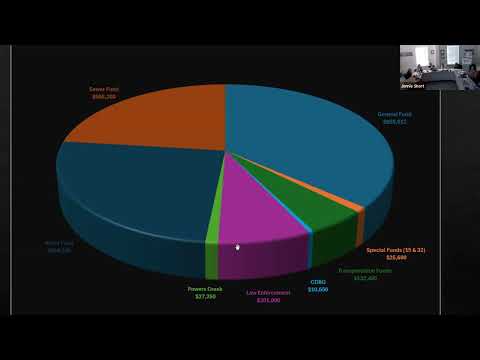
City Manager Jenny told the council the draft 2026–27 budget shows a $93,000 general-fund deficit and larger functional shortfalls once CalPERS liabilities are allocated; council discussed using reserves to cover one-time housing-element costs while pursuing rate fixes and contract reductions.
City Manager Jenny opened the council’s budget presentation by telling members the packet contained a prior draft and that corrected handouts were available: “the pages that you have in front of you are small corrections to that … they do make a pretty significant difference though on the net deficit in the general fund because there was an error in 1 of the formulas in the streets department,” she said.
Jenny said the council’s summary sheet shows a $93,000 general-fund deficit for the coming year and, after allocating CalPERS unfunded-liability payments, a larger functional shortfall. “So in summary, the general fund has an overall deficit of $93,000,” she told the council and explained CalPERS allocations as 50% general fund, 25% water and 25% sewer, which increases the water and sewer shortfalls when assigned.
The manager asked whether the council wanted to draw on reserves to cover bulky, one-time housing-element implementation costs and the council engaged in extended questions about that approach, possible deeper cuts to staffing, and whether drawing from reserves would be prudent. Jenny characterized housing-element work as cyclical and largely one-time: she told the council that roughly $123,000 of the functional cash shortfall was directly related to housing-element work that appears only once every eight years.
Council members and public commenters urged both fiscal prudence and urgency: options discussed included prioritizing one-time reserve use for housing element implementation while pursuing ongoing revenue-side fixes (such as rate updates and improved collections), and re-scoping or competitively re-procuring high-cost contracts to contain future legal and consultant spending. The council asked staff to return with a revised budget and specific proposals for cuts, revenue changes and reserve protections ahead of adoption.