Get Full Government Meeting Transcripts, Videos, & Alerts Forever!
Get email alerts on the Policy Options topic
No spam. Unsubscribe anytime.
Resident suggests dress-code ordinance to force identification of masked agents; lawyer warns legal risk for broader ban
Summary
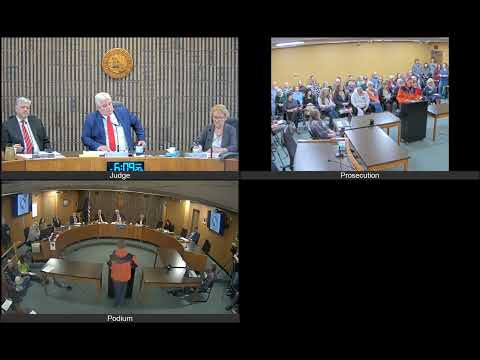
At the Feb. 17 meeting, a resident-lawyer proposed a locally enforceable dress-code requiring on-duty enforcement personnel to display clear identification and avoid masks (except for health reasons), arguing it would be legally sturdier than an explicit ban on ICE operations; supporters said identification would reduce intimidation.
Margaret Brown, who identified herself as a lawyer and chemical engineer, urged the county to consider a narrowly targeted 'dress-code' approach that would require on-duty law-enforcement personnel to display a badge, name or unique identifier and to avoid face coverings except when required by public-health rules. Brown argued that such an approach would be less likely to face a constitutional challenge than a sweeping anti-ICE resolution.
"If you really want ICE not to operate in Marquette County, the very simple thing you do is you don't target ICE. You pass a resolution... that specifies that all law enforcement personnel must, during working hours, wear identification... and absent compelling public-health reasons their faces must be free," Brown said. She recommended a continuing 90-day resolution and framed the rule as a local health-and-safety measure to reduce risks created by unidentified armed personnel operating in public.
Supporters at the meeting said clear identification and body cameras create mutual accountability and reduce complaints; Commissioner Newman and others said a dress-code or identification requirement is a constructive option to pursue while legal counsel evaluates broader policy choices. The board did not adopt a dress-code at the Feb. 17 meeting but asked staff and counsel to explore options.