Get Full Government Meeting Transcripts, Videos, & Alerts Forever!
Get email alerts on the Open Meetings topic
No spam. Unsubscribe anytime.
City attorney gives condensed Brown Act refresher, warns about social media and serial meetings
Summary
At a joint Dunsmuir council and planning meeting, City Attorney David Lim gave a 20‑minute Brown Act refresher emphasizing open‑meeting rules, bans on serial communications and new social‑media pitfalls under AB 992.
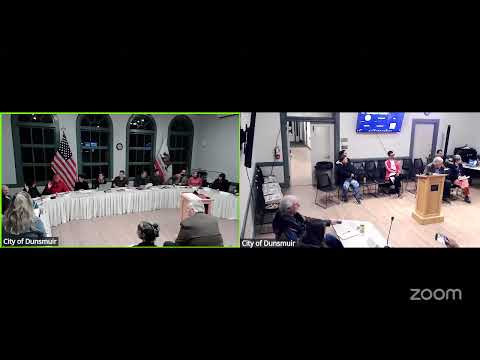
David Lim, Dunsmuir’s city attorney, opened a condensed Brown Act training at the city’s joint council and planning commission workshop on Feb. 4, telling officials the law ‘‘is a constitutional right of every citizen to know what their government is doing.’'
Lim focused on two practical risks for local boards: serial communications and social media. He illustrated prohibited ‘‘hub‑and‑spoke’’ and ‘‘daisy‑chain’’ patterns—examples in which a majority’s views can form outside a public meeting—and urged officials to avoid asking ‘‘what does Carol think?’’ about matters that may come before the body. He said: ‘‘If you think it is a Brown Act violation, assume it is.’'
Lim also flagged recent state changes that affect everyday online behavior. Citing AB 992, he warned that ‘‘if one of your fellow commissioners posts something on social media and just one more person likes it, that is a Brown Act violation’’ when the post concerns city business. He advised officials to treat staff emails as unidirectional (BCC) and to avoid ‘‘reply all’’ that could inadvertently communicate a group consensus.
The training covered related practical topics including how to treat ex parte contacts in land‑use matters, the distinction between permissible one‑on‑one staff contacts and unlawful majorities meeting privately, and the limited grounds for closed sessions. Lim summarized enforcement remedies, including the ‘‘cure and correct’’ process when a violation is alleged and the rare possibility of criminal charges for willful violations.
Lim’s slides and a fuller presentation will be made available to members and the public; he encouraged officials who want the longer seminar to request the full Brown Act course.