Get Full Government Meeting Transcripts, Videos, & Alerts Forever!
Get email alerts on the Sensory Processing topic
No spam. Unsubscribe anytime.
Mount Prospect presenter outlines sensory systems and actionable strategies for home and classroom
Summary
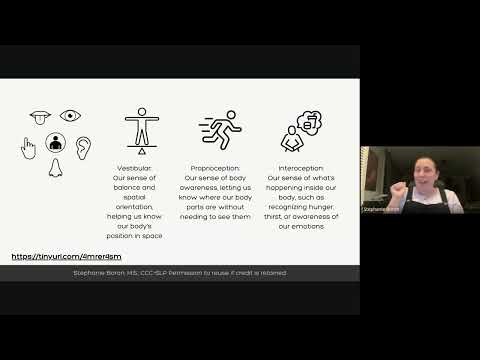
Stephanie described vestibular, proprioceptive and interoceptive systems, explained how those sensory profiles can shape behavior, and recommended practical tools—sensory bins, low-demand connection, fidgets, and safety scripts—to support regulation in school and at home.
At the center of Stephanie’s talk was a practical primer on sensory systems beyond the five senses. She named vestibular input (movement, swings), proprioception (deep pressure, weighted blankets), and interoception (internal cues such as hunger or the need to use the bathroom) and linked these systems to common student behaviors and regulation needs.
To help families and teachers, Stephanie recommended low-cost, low-demand strategies such as sensory bins, movement breaks, and shared sensory tools in classrooms; she demonstrated the idea of a sensory "glimmer" and a sensory "ick" bracket and said, "You could do it at the dinner table, in the car," as a way for families to practice shared language and preferences. She also encouraged teachers to discuss options such as dimming lights or providing a cozy space when feasible.