Get Full Government Meeting Transcripts, Videos, & Alerts Forever!
Get email alerts on the School Policy topic
No spam. Unsubscribe anytime.
Teacher urges board to reject proposed policy requiring permission to take district devices home
Summary
Dylan Ford, an educator, told the Laramie County School District #1 board the proposed amendment to Chapter 5, Section 9 would force teachers to get supervisor permission before taking district devices home and shift financial liability for damage onto staff, and he urged the board to vote no.
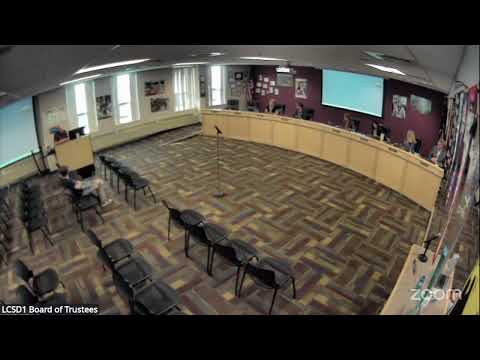
Dylan Ford, an educator, urged the Laramie County School District #1 Board of Trustees to reject a proposed amendment to Chapter 5, Section 9 of the district's policy that would require staff to obtain supervisor permission before taking district-issued laptops, iPads or other devices off campus.
Ford said the amendment also would place financial liability for damaged equipment on educators. “It's burdensome. It's silly. It's a solution in search of a problem,” he said, arguing the requirement does not reflect the realities of classroom work, virtual days or traveling teachers who must take devices home to complete grading and instruction.
Ford also criticized changes to the policy advisory committee process, saying the district shifted from an in-person, deliberative committee to an email-only review that provides no opportunity for back-and-forth discussion. He asked the board to maintain a working policy committee that allows educators to discuss and shape policy before it reaches the public comment period.
The board did not take immediate action on Ford's request during the public comment segment; the policy amendment remained on the agenda for future consideration. The district's public comment rules — including a three-minute time limit and a requirement to state a first and last name — were read aloud at the start of the meeting.