Get Full Government Meeting Transcripts, Videos, & Alerts Forever!
Get email alerts on the Flock Lpr topic
No spam. Unsubscribe anytime.
Police chief defends Flock license‑plate readers; council approves state permit amid privacy concerns
Summary
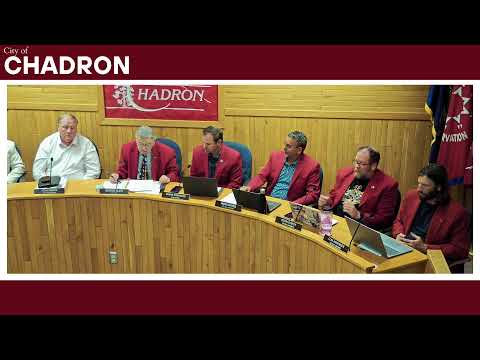
After a detailed presentation and more than an hour of public comment raising privacy and misuse concerns, the Chadron City Council approved a state permit agreement allowing automated license‑plate readers at town entrances, with a 3–2 roll call on Resolution 2026‑63.
Chadron Police Chief Rick Hickstein defended the department's Flock automated license‑plate reader (LPR) program on Monday, saying units placed on the town's outskirts have helped recover stolen vehicles, locate missing people and solved violent crimes.
"It takes a picture of a vehicle, compares that plate to NCIC and notifies me instantly if there's a hit," Hickstein said, adding that the contract with Flock retains non‑hit images for 30 days and that searches require multi‑factor authentication and a case number. "We control who we share with. I do not share with the State Patrol or the federal government right now."
The chief told the council the cameras are positioned at highway ingress and egress points (US‑20 and US‑385) and said the system is affordable within the patrol budget: about $2,500 per camera and roughly $7,500 per year for their current deployment.
Residents and former officers asked sharper questions in public comment. Roger (resident) said his long experience in law enforcement made him worried about commercial data markets and reported cases of misuse elsewhere. "Flock Safety... an $8.4 billion corporation," he said, adding that courts and local councils have previously moved to terminate contracts in other cities.
Tim Hardy and others urged the council to consider national lawsuits and reported incidents in other jurisdictions that they said showed data sharing and misidentification risks. "A small error rate can still affect real families," Jeffrey Ledbetter told the council, urging it to oppose expansion of LPRs.
After public comment the council took up Resolution 2026‑63, an agreement among the Nebraska Department of Transportation, the city and the police department to permit automated LPRs on state highways. Chief Hickstein described the state permit as a formality and said that not approving the permit would be the appropriate time to remove current cameras. Council members debated whether to sign that evening or to delay for additional review.
On roll call the resolution passed 3–2 (Shepherd, Graves and Klein in favor; Alexi and Anderson opposed). Hickstein noted the department's audits and a proposed public transparency portal for agency searches and said he would welcome residents to review use records at the police department.
The council did not authorize additional cameras or funding beyond the current deployment during the discussion; several members repeatedly raised concerns about future interagency access and the potential for broader networking beyond the chief's present control.