Get Full Government Meeting Transcripts, Videos, & Alerts Forever!
Get email alerts on the Property Tax topic
No spam. Unsubscribe anytime.
Keystone Heights council weighs small millage bump as statewide amendment threatens local flexibility
Summary
Council members debated recommending a proposed maximum millage of 3.7902 at next month’s hearing, weighing roughly $19,400 in extra revenue against the political and programmatic limits a pending statewide amendment would place on ad valorem spending.
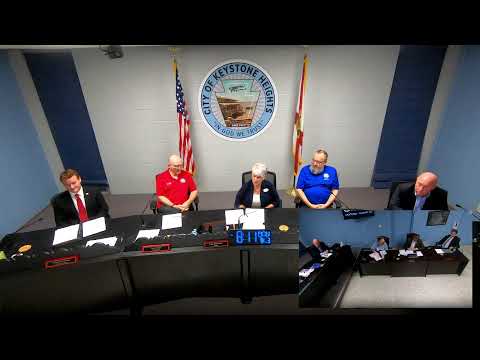
The Keystone Heights City Council spent much of its Aug. 3 meeting weighing whether to recommend the city’s proposed maximum millage rate of 3.7902 ahead of the September TRIM review. Council members and staff said the change would generate modest additional revenue for a small city budget that relies heavily on property taxes.
“We are going to come to you next month and recommend the maximum millage proposed rate of 3.7902,” said a council member. Staff and council cited the city’s current rate of 3.6073 and the rollback rate of 3.5158 when illustrating the options. City staff estimated the proposed increase would create roughly $19,418 more in year‑one revenue than the rollback approach while still leaving the city in a projected deficit compared with prior spending levels.
Supporters said the extra dollars would help preserve core services and a limited slate of events and infrastructure work in the face of rising costs for goods and contracts. Opponents warned the increase could worsen public perception and urged exploring alternatives such as bonds, targeted fees, grants or deeper cuts to non-core spending.
“My concern is it undoes really a lot of the progress that's been made with the millage perception. It will read as a revenue increase,” a council member said, arguing for caution and public engagement before raising rates.
The discussion also centered on a pending statewide ballot amendment that, if adopted, would restrict how ad valorem revenue may be used — limiting it to defined "core services" and infrastructure in some cases. City Attorney comments during the meeting noted the amendment could force municipalities to reassign or restrict funds currently used for parks, events and other non-core activities.
Council members agreed to take public input and further analysis before a final vote. Staff scheduled additional outreach and a budget workshop for the council’s Sept. 14 meeting, when TRIM decisions must be finalized.