Get Full Government Meeting Transcripts, Videos, & Alerts Forever!
Get email alerts on the Wildfire Code topic
No spam. Unsubscribe anytime.
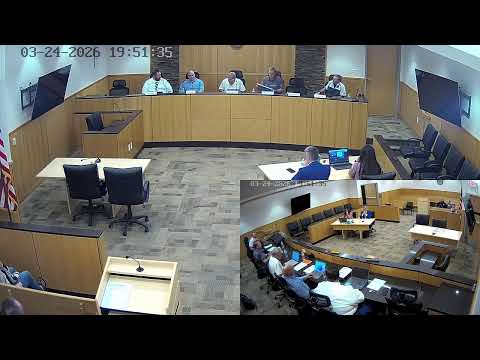
Rangeley council votes to oppose Colorado wildfire resiliency (WUI) code after local impact briefing
Summary
After a presentation by the town building official on the new state wildfire resiliency/WUI code and its likely effects locally, the Rangeley Town Council voted to adopt a formal position opposing the mandate, citing cost and insurance concerns.
The Rangeley Town Council voted to oppose the Colorado Wildfire Resiliency (WUI) code after a presentation from the town—s building official and a wide-ranging council discussion. The motion to oppose passed by voice vote following debate about costs, insurance impacts and local control.
Matt Franks, Rangeley—s building official, summarized the timeline and basics of the new state rule, saying, "It is mandated that the local jurisdictions adopt the code by 04/01/2026," and that enforcement of inspections would not be required until July 1, 2026. Franks described two hazard classes in the code and noted that, using the state's map, "75 to 80% of the town of Rangeley falls within the class 2" higher-hazard area, though he emphasized local jurisdictions may petition the map.
Council members raised several concerns about what adoption would mean locally: required roof and exterior-material upgrades, defensible-space rules near buildings, and a perceived mismatch between an "urban" code and Rangeley—s frontier community character. Franks and other speakers also warned that insurance companies might use the state hazard map when setting premiums and coverage decisions, a point the council cited when adopting its opposing position. The council did not adopt a legal ordinance to implement the code; instead the formal motion recorded the council—s opposition to the state mandate.
The council left open the option to revisit the issue in the future, including petitioning the state's map or adopting the code later if local circumstances or insurance markets change.