Get Full Government Meeting Transcripts, Videos, & Alerts Forever!
Get email alerts on the Budget topic
No spam. Unsubscribe anytime.
Board confirms 2nd interim budget report; projection shows multi-year deficits and healthy reserves
Summary
The board confirmed the 2nd interim budget report showing the district in basic-aid status (about $19M into basic aid), an unrestricted ending fund balance of roughly $62M and a projected $9.5M deficit for 2026-27 under current assumptions.
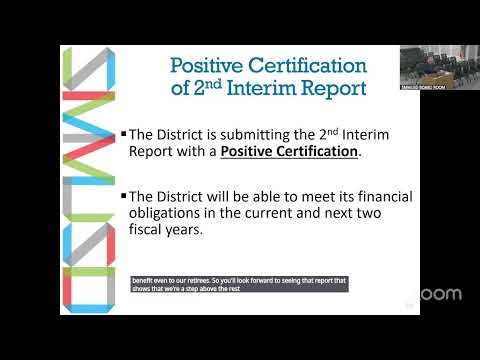
The Santa Monica-Malibu Unified Board of Education voted to confirm the district's 2nd interim budget report covering financials through January 31. Assistant Superintendent of Business Gerardo Cruz presented the report and a multiyear projection that keeps the district fiscally solvent through the current and next two fiscal years but projects a larger out-year deficit under current assumptions.
Cruz said the district's Local Control Funding Formula (LCFF) entitlement is about $102,000,000 and property-tax revenue is approximately $122,000,000, placing the district roughly $19,000,000 into basic-aid status. He reported an unrestricted ending fund balance of about $62,000,000 and explained that an outstanding deficit draw of about $10.5 million reduces available balances to the mid-$50 million range; the district currently meets the 3% statutory reserve and maintains an unrestricted reserve of roughly 21% (staff noted recommended basic-aid comparables are higher).
Staff flagged a $600,000-plus decrease in projected health-benefit costs at the 2nd interim (due to open-enrollment adjustments), an increase of about $670,000 in other operating costs (largely maintenance agreements and some capital equipment), and roughly $964,000 net upward movement in special-education subcontracted placements. The multiyear projection shows the 26-27 deficit increasing to about $9.5 million (up from $6.3 million at first interim) because of additional staffing and an updated health-benefit assumption that rose from 7% to 9% in later years. Cruz said the assumptions also rely on local revenue measures such as Measure R and a continued MFUA assumption; if those assumptions change, staff said additional reductions may be required.