Get Full Government Meeting Transcripts, Videos, & Alerts Forever!
Get email alerts on the Public Act 25 1 Overview topic
No spam. Unsubscribe anytime.
Shelton planners briefed on state law that requires 2–9‑unit housing in commercial zones
Summary
Consultants told the Shelton Planning and Zoning Commission that Connecticut’s Public Act 25‑1 (formerly HB 8002), effective July 1, requires municipalities to allow 2–9 unit "transit community middle housing" and mixed‑use development in commercial or mixed‑use zones through administrative (summary) review; commissioners asked for maps and visual examples before setting local area and bulk standards.
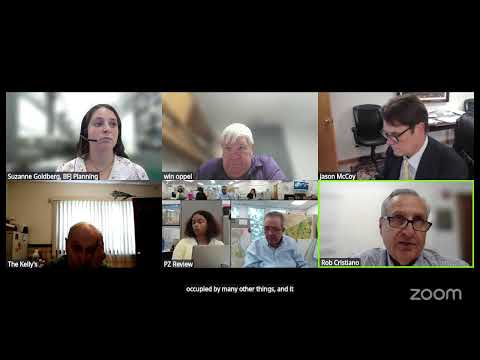
The Shelton Planning and Zoning Commission on Aug. 5 held a special remote meeting to discuss how to bring the city into compliance with Connecticut Public Act 25‑1, which consultants said requires municipalities to allow 2–9 unit residential developments and mixed‑use buildings in commercial and mixed‑use zones.
"It basically means an all residential development somewhere between 2 and 9 units," Suzanne Goldberg, senior planner at BFJ Planning, told the commission, listing duplexes, triplexes and cottage clusters as examples. Goldberg said those uses must be permitted by summary review — an administrative approval that disallows discretionary special permits or public hearings so long as objective area and bulk standards and public safety requirements are met.
Chairman Rob Cristiano framed the meeting as a focused work session to discuss the housing component only and to reserve other items such as parking for subsequent sessions. "This special meeting was scheduled specifically so the commission could give this work the time and attention it deserves," he said.
Goldberg emphasized that while the state law constrains which uses must be allowed, "the city can set standards for setbacks, coverage, density, [and] height" to determine the built form of transit community middle housing. Legal counsel Jason McCoy and BFJ staff told commissioners those standards must be objective to withstand legal review.
Commissioners asked for follow‑up materials showing where the law would apply and what typical lots would look like under current area and bulk maximums; Goldberg agreed to prepare mapped overlays and representative lot examples for the next meeting. The commission took no formal votes on policy at the session.