Get Full Government Meeting Transcripts, Videos, & Alerts Forever!
Get email alerts on the Alpr Flock Privacy topic
No spam. Unsubscribe anytime.
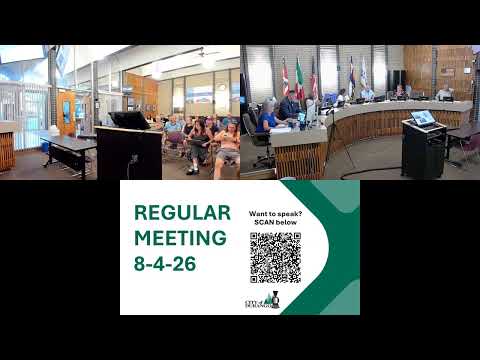
Durango police present Flock ALPR report as residents press privacy concerns
Summary
Police chief said the department recorded 929 Flock searches in June, limited external sharing to 4-corners agencies, and emphasized audits and 30-day retention; several residents later raised petitions and national misuse examples urging contract cancellation or non-renewal.
Chief Bryce Curran presented the police department's June automated license-plate reader (ALPR) report and defended current controls while acknowledging public concern. Curran said the department conducted 929 searches in June and has reduced external sharing from hundreds of agencies to a 4-corners-only cohort (Utah, Colorado, New Mexico, Arizona). "Courts have repeatedly distinguished ALPR technology from continuous surveillance," Curran said, arguing the system identifies vehicles and plates, not people, and that records currently delete after 30 days.
During public comment, several residents challenged that characterization and urged the city to cancel or let the Flock contract expire. Meg Wilmot said a local petition topped 1,400 signatures and cited national misuse cases. "These are all uploaded into a centralized national database that any law enforcement officer with access to it can access at any time without oversight," Wilmot said. Councilors asked follow-up questions about who receives shared data and whether the city retains control; the chief said the data is the city's, is stored by the vendor under an MOU, and access is auditable and restricted.
Council discussion emphasized balancing privacy and public safety; councilors asked staff for clearer documentation on data-sharing MOUs and chain-of-custody for exports. Curran noted a recent operational change that makes custom hot lists expire after 60 days unless manually reentered and provided examples of arrests and stolen-vehicle recoveries where ALPR alerts assisted investigatory work.