Get Full Government Meeting Transcripts, Videos, & Alerts Forever!
Get email alerts on the Public Health Surveillance topic
No spam. Unsubscribe anytime.
Board hears West Nile, cyclospora updates as staff urge basic precautions
Summary
Worcester City Board of Health received updates on mosquito surveillance—officials reported 57 positive mosquito samples and a 'moderate' West Nile level—and a cyclospora briefing noting about 18 Massachusetts cases; staff emphasized personal precautions and produce washing.
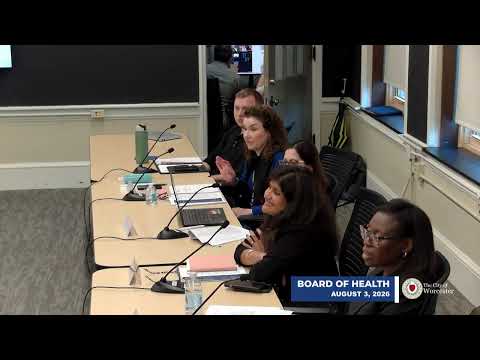
The Worcester City Board of Health on Monday reviewed recent local surveillance for mosquito-borne illness and a regional outbreak of cyclospora, with staff urging residents to take basic precautions.
Amelia, a public-health presenter, said the city’s West Nile virus risk moved to a "moderate" level this week and that the division recorded 57 new mosquito samples that tested positive in the region. "We still recommend what is necessary to stop infections," she said, and reminded residents to protect themselves at dawn and dusk and to use repellents. Dr. Jennifer Bradford, medical director of health and human services, reiterated that the positive samples were mosquito detections, not human cases.
Dr. Bradford gave a separate briefing on cyclosporiasis, an intestinal illness caused by Cyclospora. She said cases usually rise in late spring through late summer and that the current outbreak is concentrated in Midwestern states; Massachusetts has seen about 18 cases so far. She noted common vectors in recent outbreaks include leafy greens and fresh herbs such as lettuce, raspberries and basil, and reviewed symptoms—profuse diarrhea, nausea, abdominal cramping—and treatment options, saying severe cases may require antibiotics.
Board members asked staff about mapping mosquito hotspots and distribution of weekly arbovirus reports; staff agreed to circulate the GIS-enabled reports to the entire board. The board emphasized that public messaging should stress basic prevention—covering up at dawn and dusk, repellents and washing produce—while health departments continue surveillance and targeted spraying.
The board did not take formal regulatory action on these items and directed staff to continue weekly reporting and public outreach.