Get Full Government Meeting Transcripts, Videos, & Alerts Forever!
Get email alerts on the Inland Port topic
No spam. Unsubscribe anytime.
Fremont officials detail inland port progress, $2M state study and $3M earmark for Morningside Road
Summary
Fremont Municipal Inland Port Authority and GFDC updated council on a long-term plan for a 1,500‑acre ‘mega site,’ reporting a $2,000,000 state engineering study for Morningside Road (about 90% complete) and a $3,000,000 federal designation for paving; officials said utility capacity—especially power—remains the principal obstacle to near-term development.
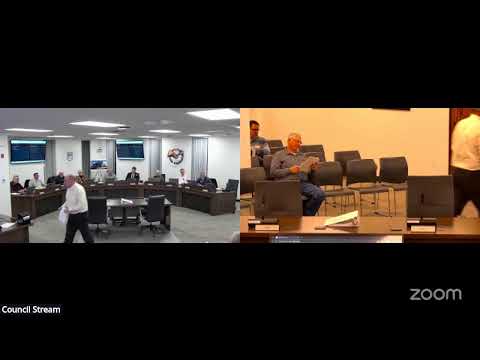
Dave Heinemann, chairman of the Fremont Municipal Inland Port Authority, and Megan Styles, executive director of the Greater Fremont Development Council, briefed the council on Feb. 24 about progress and financing for the Port Authority’s 1,500‑acre site east of Highway 275.
Heinemann described the project as a long-term economic development effort and thanked the city and county for earlier zoning work. “This is a team effort,” he said, noting the site has been a finalist for three major projects in recent years. Styles summarized funding secured and leveraged for roadway and utility work, saying the port authority received $2,000,000 in state funds for engineering and that Congressman Flood designated $3,000,000 for future paving of Morningside Road.
Styles outlined how matching programs stack: the community must invest local dollars to unlock state matches and federal funds, and she said the state’s program can leverage up to $30,000,000 in total funding when local matches and other sources align. She told council the program requires a local investment of $3,400,000 by this August to retain current opportunities.
Officials and utility staff emphasized that power supply and other utility capacity remain the primary constraints to shortening development timelines. “The power is probably our biggest challenge,” Styles said, noting the need for partnerships with Omaha Public Power District and potential private investment to build rail spurs and other heavy infrastructure.
Next steps flagged by presenters include a planned RFP for a rail developer in Q2, continued master planning work with Burns & McDonald, and ongoing coordination with Fremont Department of Utilities and OPPD on longer‑term power needs.