Get Full Government Meeting Transcripts, Videos, & Alerts Forever!
Get email alerts on the Budget topic
No spam. Unsubscribe anytime.
West Des Moines staff warn state tax changes could leave city with $6.6 million budget gap
Summary
City finance staff told the council that a new 2% cap, a homestead exemption and other state tax changes will reduce available property‑tax revenue and could widen an already planned deficit to roughly $6.6 million in the 2027–28 budget.
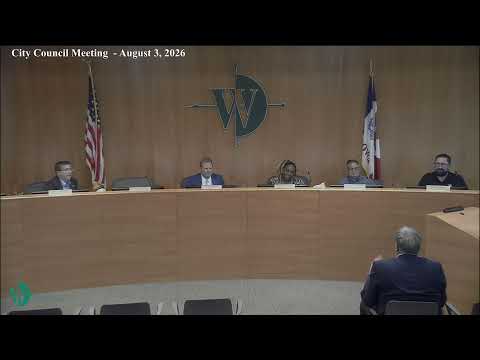
West Des Moines finance staff told the City Council on Aug. 3 that recent state legislation will cut or cap several local revenue streams and create a sizable funding shortfall that the city must close before next year’s budget is final.
Chris Hamlet, senior budget analyst in the finance department, described five major changes: a 2% cap on growth in revenue from existing properties, a new 10% homestead exemption for qualifying homes, elimination of a business‑property tax backfill, staged changes to multi‑residential rollback rates, and tighter treatment of tax‑increment financing (TIF). Hamlet said the city’s general‑fund property‑tax base was about $56 million in 2026–27 and that, after the homestead exemption and other adjustments, staff project the city could face a $6,600,000 budget gap in early projections for 2027–28.
"So now we're up to a $6,600,000 deficit is our early projections," Hamlet said during the workshop presentation. Staff showed calculations indicating the homestead exemption alone reduces city property‑tax revenue by about $1.8 million, and the loss of the business backfill accounts for roughly $421,000.
City Manager Tom Hadden and other finance staff outlined options to narrow the gap: releasing TIF valuations back to the general fund where appropriate, shifting certain administrative staff costs to enterprise funds (sewer, stormwater, solid waste), prioritizing capital‑improvement projects, pursuing limited fee increases or a targeted hiring freeze, and drawing on reserves as a last resort. The presentation emphasized the city’s strong reserve position relative to many peers but warned that prolonged structural shortfalls could force service reductions or staff adjustments.
Council members pressed staff on the timing and mechanics of counting new growth, the impact of releasing TIF, and whether revaluation cycles or rollback‑rate changes could help. Hamlet said a tear‑down and rebuild is generally treated as “new growth,” while tenant improvements or other incremental upgrades may be classified differently for the cap. The finance team said they will return with more detailed scenarios and proposed policy choices for council consideration.
The workshop produced no immediate votes; staff will bring follow‑up proposals and a revised CIP prioritization process to the council later this year.