Get Full Government Meeting Transcripts, Videos, & Alerts Forever!
Get email alerts on the Budget topic
No spam. Unsubscribe anytime.
Council reviews $98.7 million preliminary FY2026–27 budget as major costs push spending higher
Summary
City staff presented a $98,673,526 preliminary budget — a 14.5% increase from last year — driven by a pending police union raise, a 24% health-insurance spike, new risk-and-safety positions and several capital projects funded largely from reserves.
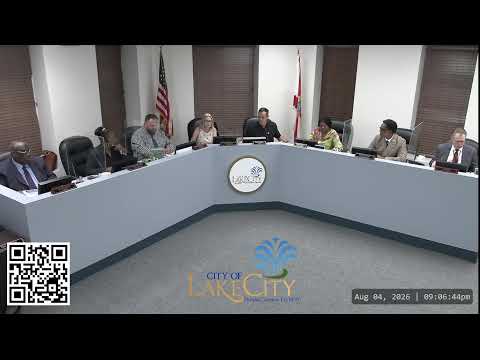
Lake City officials opened a two-day review of the draft fiscal year 2026–27 budget on Aug. 4, with Finance Director Angie Moore saying the proposed budget totals $98,673,526, a 14.5% increase over last year.
“The city's proposed budget of $98,673,526 representing a 14.5% increase over last year's budget,” Moore said as she summarized the agency-level totals and the council's decision to hold the millage at the rollback rate of 4.7824 mills.
City Manager Rosenthal told the council the budget reflects several cost pressures, including a near-term Fraternal Order of Police agreement that would provide a $12,000 annual salary increase for union officers. “The agreement will provide a total of $12,000 annual salary increase for all union officers,” he said, noting the increase would add roughly $1.1 million to the general fund operating budget.
Rising health-insurance costs are another driver: Rosenthal said staff obtained multiple quotes and face a roughly 24% premium increase, while property and workers’ compensation costs remain stable under existing contracts. The manager also proposed a new safety and risk department — a change he estimated would cost about $319,000 — and identified capital priorities including a $600,000 Nutanix IT cluster upgrade, park renovations and several street-repair projects.
Moore emphasized the council’s choice of the rollback millage rate will constrain revenue growth and limit the city’s ability to cover rising operating costs without future revenue adjustments. The workshop will continue with department-level reviews and follow-up sessions to reconcile program requests with the council’s revenue assumptions.