Get Full Government Meeting Transcripts, Videos, & Alerts Forever!
Get email alerts on the Transportation topic
No spam. Unsubscribe anytime.
Groveland officials press MassDOT for clearer schedule and school‑time traffic counts on Bezallier Bridge work
Summary
MassDOT's Bezallier Bridge replacement (through spring 2032) could reduce lanes and push traffic onto Groveland streets. Officials asked for scheduling clarity and urged traffic counts during school sessions, raised safety concerns for Gardner Street turning radius and suggested considering weight restrictions or signal timing adjustments.
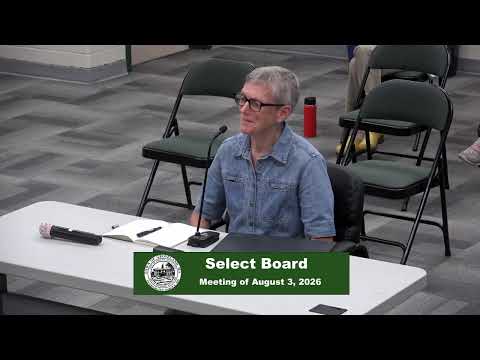
The select board discussed anticipated traffic impacts from the Bezallier Bridge replacement during the August 3 meeting after the town administrator briefed members on MassDOT’s planning and outreach. The project, which replaces a 100‑plus‑year‑old bridge that carries more than 25,000 vehicles daily, began this summer and is expected to continue into spring 2032.
Administrator Rebecca said MassDOT plans to conduct baseline traffic counts at the Gardner Street/School Street intersection to determine whether additional traffic management is warranted as the project moves to single‑lane operations in later phases. Several board members strongly urged MassDOT to perform those counts during the school year rather than in August, arguing summer data undercounts peak congestion when school buses, pedestrians and routine commuter flows are present.
One select member recommended the town request weight limits or no‑truck restrictions for narrow residential approaches, and another suggested asking the highway superintendent to evaluate turning radii and post recommendations. Board members also asked the town administrator to invite MassDOT project staff to a future meeting to answer questions about lane closures, overnight working hours, and the overall schedule.
Why it matters: A prolonged bridge replacement with lane restrictions on a heavily used regional crossing can shift significant traffic onto local roads, raise safety concerns for students and pedestrians and prompt engineering or regulatory responses (signing, weight limits, signal timing) to reduce cut‑through impacts.