Get Full Government Meeting Transcripts, Videos, & Alerts Forever!
Get email alerts on the Guardianship topic
No spam. Unsubscribe anytime.
Experts urge guardianship only as last resort, outline court process in Arlington briefing
Summary
At an Arlington DD Committee meeting, attorney Erica Wood detailed how guardianship differs from power of attorney and supported decision making, walked through the court petition and oversight process, and emphasized less-restrictive options and annual reporting requirements.
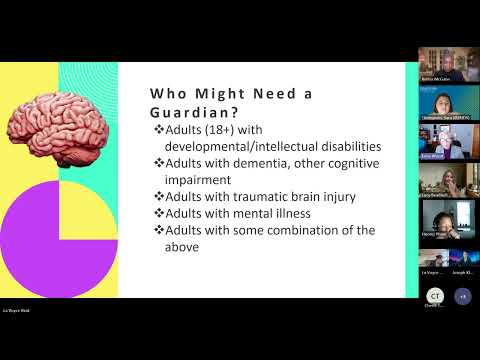
Erica Wood, a former Arlington County Commission on Aging member and attorney, told the Arlington DD Committee that guardianship is a judicial tool that should be used only when necessary. She said the court appoints a guardian and that “the court appoints 1 person or entity to make personal and or property decisions for another whom the court finds unable to make such decisions for themselves.”
Wood explained the court process step by step: a petitioner files a petition and notice must be provided to the respondent and other interested parties; the court typically appoints a guardian ad litem (an attorney serving as the court’s investigator); clinicians perform capacity assessments; and the judge must find by clear and convincing evidence that a guardian is needed. She noted reporting and oversight obligations for guardians, including annual reports to the Department of Social Services and required accountings.
Wood stressed the balance guardians must strike between protection and respecting a person’s expressed values, and warned that overly broad orders can “remove fundamental rights.” She summarized the philosophy of the presentation plainly: “That’s why we call guardianship a last resort.”
The presentation included practical details for families: guardians must take an oath before they may act, annual oversight can be lengthy, and Virginia now uses review hearings in some cases. Wood advised that courts can issue either narrow, limited orders or broader orders depending on evidence and that families should carefully evaluate what specific authorities they ask the court to grant.
The committee adjourned the guardianship portion after the presentation and moved into the supported decision making agenda item.